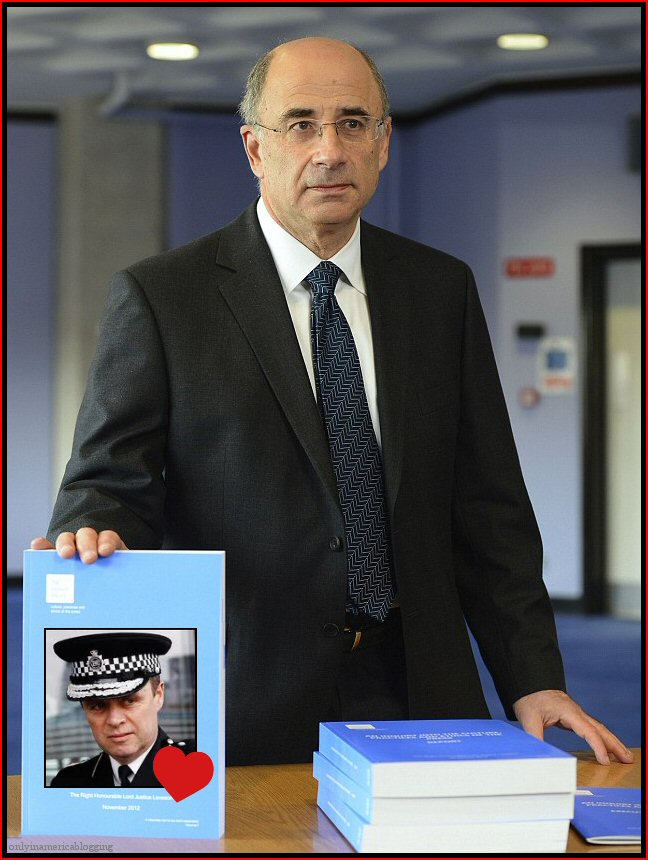
Wednesday, December 12, 2012

"Reagan the Baffled" and Other Gems: Fred Reed on American Politics


I didn't set out to bring you this piece below, but rather a more hard hitting, if not a quite miserable piece by the irrepressible Fred Reed. But for impact and misery I have no taste today. So in keeping with the majority of Fred Reed articles that can be found featured on this blog, I shall stick with the previous formula, Fred Reed doing what he does best, writing with no small amount of humour.

Oh! and cynicism, did I mention the cynicism? it wouldn't be Reed without a helping of that to help any essay along.

Of the original article that I intended to run, I shall leave a taster and a link below, thus allowing me to do here, something that goes against my own blogging ethics, that of running another's article in its entirety.

But at this moment my biggest conundrum is, how I might fit  Reagan the Baffled in the header? It being just one of Reed's little gems in the text. (Easy enough)


Election Remorse

Why the Romnibus Wasn't the Omnibus
by Fred Reed
November 12, 2012

I have been a bad person. I did not vote. I confess it. I would rather be caught in a gay brothel dealing in underage boys than in a voting booth. The two are equally degrading, but voting carries the further implication of low intelligence. Ages ago a Japanese friend told me “We are not too intelested in Amelican national erection.” Me too either.

What was the point? We suffered years of blather from unqualified charlatans who regard the public as ignorant hamsters of low caste, and what do we get? The same unqualified charlatan. We could have done it without an election. Think of the peace and quiet.

This deplorable practice—holding elections, I mean—is thought to be fraught with consequences. For example, I am told that the defeat of Romney signals the end of rule by Angry Old White Men. I hope so. I enjoy living in the Third World, and soon Americans will be able to do so from the comfort of home.

To me Mr. Romney’s candidacy signaled the Republicans’ admirable capacity to do the impossible: find an aspirant even more depressing than Obama. But they managed. It was a triumph of the human spirit. Never underestimate American ingenuity.

How was this result achieved? Mr. Romney asserted that Russia is America’s most perilous adversary, wanted to deal fiercely with China, asserted the nonexistence of Palestinians, pledged his undying troth to Israel (America presumably would be a second wife), wanted to attack Iran, and thinks we need to increase the military budget.

Oh god. Oh god.

Were the Chinese paying him off? If you want to bring the United States down, keep it spending. On anything. On everything. Does nobody understand this?

It is most curious. Conservatives think that Reagan the Baffled won a great victory over the Soviet Onion by spending it into penury. Grrr. Woof. But in the great sweep of things, what he did was to increase military spending. The Russians didn’t matter: The Pentagon quickly found another financial pretext in Terrorism after the budgetary godsend in New York. Subsequent presidents continued the trend. From a Chinese point of view, it is wonderful. They build their economy while we assassinate ours. They don’t need a military. Ours is doing the job for them.

The trick is to keep America’s wars going as long and inconclusively as possible until the land of the free (free lunch, free rent, free everything) ends up selling pencils on street corners. I figure Beijing pays the White House under the table.

So much for Romney. By contrast, with Obama we will have little cause for alarm, other than abolition of the Constitution, currency controls, selective denial of passports to enemies of the administration, uncontrolled inflation, wild federal spending, and a level of surveillance that would frighten a laboratory rat. See? The Democrats are much better. I feel so liberal.

In a decade I figure we will look longingly at North Korea as a model of civil liberties.

Then we have the gender gap. I am told that women favored Obama by a margin of twelve points, while men went for Romney by eight. Here is clear evidence that women do not understand politics. It is too difficult for them. They worry their pretty little heads about trivia like schooling, health care, peace, security, paying the bills, and having a livable country in which to live. No nation can long survive such an agenda. Repeal the Nineteenth Amendment, I say. Should women ever evolve politically, which doesn’t seem likely, they will see the wisdom of killing child goat-herds in Afghanistan, like their sexual betters.

And the geography gap. I have seen Mr. Romney quoted as describing Syria as Iran’s “route to the sea.” This is fascinating. He doesn’t know where Iraq and Turkey are. And what does he think the Persian Gulf is? A ham sandwich? Oh well. There’s always Google Earth.

But the hamstervolk want a hamsterfuehrer who Looks Like America, and if a candidate were discovered to know where his wars were, he would be thought elitist.

We come to the threat of socialism. Mr. Obama, I am told more often than I really think necessary, is a socialist. He is going to make America into Europe, thought to be expiring of socialism, a sort of economic gangrene. The same people also tell me, often with curious orthography, the he is a Marxist, a communist, a Moslem, and an America-hating Christian. This notion is an example of the remarkable versatility of barely existent minds. If the man is a Marxist or communist, these being explicitly atheistic, then he cannot be a Moslem or any kind of Christian. If he is a Christian, then he cannot be a Moslem or a…

But socialism. On the outdated theory that words mean things, I had recourse to the dictionary and found that socialism is “an economic system in which the means of production and distribution belong to the government.” Thus America cannot be socialist, since the means of production belong to the Chinese. Nor can I understand why Europe is regarded as socialist. I have walked the streets of Madrid, Paris, Sevilla, Frankfurt, on and on, and seen no indication that the stores and restaurants belonged to government. Neither, I thought, did Siemens, Dassault, BP, BMW, Mercedes, Santander, Leica and, most importantly, Bass and Guinness.

Europe looks to me like a capitalist economy with good health care and long vacations. I feel deeply threatened by this nightmare, and hope that Congress will impeach Obama before he can impose such a dreadful thing.

The idea that Obama could turn the US into a socialist realm is more interesting psychologically than economically. It suggests depths of giddy retardation that could be plumbed only in a bathysphere. Corporations control the US. They own Congress. Do you really think that the CEO of Lockheed-Martin wants to see the company nationalized and himself put on a federal salary? Oh sure, any day now. In fact, I expect it by nightfall.

Yes, I know. I will get email telling me of the economic collapse of Europe, in stark contrast to America’s booming economy, full employment, staggering trade surplus, and incorruptible government.

Despite all these blessings brought to us by our laudable leadership, I suggest that instead we ought to borrow Angela Merkel, Uri Avnery, or that unpronounceable but indescribably gutsy and intelligent woman who is giving the dictators hives in Burma. Diversity would be our strength.  Fred Reed

As mentioned.

Dulce et Decorum

And May You Get the Chance
by Fred Reed
December 8, 2012

I am a soldier. I am dirt. With Joshua I put the cities of Canaan to the sword while women screamed and tried to protect their babies. I spent long days in Nanjing butchering and butchering civilians because I enjoyed it. For I am a soldier. I am dirt. I fire-bombed Hamburg till the wind-fanned flames left nowhere to hide and the people burned screaming and their fat puddled in the streets. I am a soldier. I am dirt.

On the crumbling walls of Angkor Wat, the Cold Lairs, trees now crawling over the walls, you may see me carved, marching, marching to kill forgotten peoples, it matters not whom. In the sweltering heat of Chichen Itza and the terrible winter of Stalingrad and the flaming paper cities of Japan and on the Death March of the PhilippinesI killed and killed, for I am a soldier. I am dirt. I kill.

In this I glory. I spend my declining years drinking in bars with old soldiers I knew when Breda fell to us and we raped and killed and looted, when we torpedoed the troop ships and left the soldiers in their thousands to drown slowly as their strength gave out. The fierce exultation of watching Atlanta burn, Pearl Harbor, Nagasaki, these I remember lovingly. For I am dirt.

Crush their skulls and eat their faces, we say with remembered bravado. We remember the adventures fondly. They almost had us at Plei Cuy when a 551 arrived with beehive rounds, and that put paid to them, hoo-ah. more

Tuesday, December 11, 2012

Leveson's Punch and Judy Show by John Pilger


My favourite laugh-out-loud quote of His Lordship is: "I have seen no basis at any stage for challenging the integrity of the police."


Leveson's Punch and Judy show on the press masks 'hacking' on a scale you can barely imagine

John Pilger
6 December 2012


In the week Lord Leveson published almost a million words about his inquiry into the "culture, practice and ethics" of Britain's corporate press, two illuminating books about media and freedom were also published. Their contrast with the Punch and Judy show staged by Leveson is striking.


Sans Caption

For 36 years, Project Censored, based in California, has documented critically important stories unreported or suppressed by the media most Americans watch or read. This year's report is Censored 2013: Dispatches from the media revolution by Mickey Huff and Andy Lee Roth (Seven Stories Press). They describe the omissions of "mainstream" journalism as "history in the un-making". Unlike Leveson, their investigation demonstrates the sham of a system claiming to be free. Among their top 25 censored stories are these:


Since 2001, the United States has erected a police state apparatus including a presidential order that allows the US military to detain anyone indefinitely without trial. FBI agents are now responsible for the majority of terrorist plots, with a network of 15,000 spies "encouraging and assisting people to commit crimes". Informants receive cash rewards of up to $100,000.


The bombing of civilian targets in Libya in 2011 was often deliberate and included the main water supply facility that provided water to 70 per cent of the population. In Afghanistan, the murder of 16 unarmed civilians, including children, attributed to one rogue US soldier, was actually committed by "multiple" soldiers, and covered up. In Syria, the US, Britain and France are funding and arming the icon of terrorism, al-Qaida. In Latin America, one US bank has laundered $378bn. in drug money.


In Britain, this world of subjugated news and information is concealed behind a similar façade of a "free" media, which promotes the extremisms of state corruption and war, consumerism and an impoverishment known as "austerity". Leveson devoted his "inquiry" to the preservation of this system. My favourite laugh-out-loud quote of His Lordship is: "I have seen no basis at any stage for challenging the integrity of the police."


Captioned

Those who have long tired of deconstructing the clichés and deceptions of "news" say: "At least there is the internet now." More John Pilger

Wednesday, December 05, 2012

The Intelligence Squared Debate: "The Catholic Church is a force for good"

I have upped two segments, those featuring Stephen Fry and Christopher Hitchens, plus the complete 2009 debate.

If you watch nothing else, do watch Stephen Fry, I thought he came across particularly well.

This post debate report from the Telegraph.

Intelligence Squared debate: Catholics humiliated by Christopher Hitchens and Stephen Fry 
By Andrew M Brown
October 19th, 2009 
I have just witnessed a rout – tonight’s Intelligence Squared debate. It considered the motion “The Catholic Church is a force for good in the world”. Christopher Hitchens and Stephen Fry, opposing the motion, comprehensively trounced Archbishop Onaiyekan (of Abuja, Nigeria) and Ann Widdecombe, who spoke for it. The archbishop in particular was hopeless. 
The voting gives a good idea of how it went. Before the debate, for the motion: 678. Against: 1102. Don’t know: 346. This is how it changed after the debate. For: 268. Against: 1876. Don’t know: 34. In other words, after hearing the speakers, the number of people in the audience who opposed the motion increased by 774. My friend Simon, who's a season ticket holder, said it was the most decisive swing against a motion that he could remember. 
The problem (from the Catholic point of view) was that the speakers arguing for the Church as a force for good were hopelessly outclassed by two hugely popular, professional performers. The archbishop had obviously decided that it would work best if he stuck to facts and figures and presented the Church as a sort of vast charitable or “social welfare” organisation. He emphasised how many Catholics there were in the world, and that even included “heads of state”, he said, as if that was a clincher. But he said virtually nothing of a religious or spiritual nature as far as I could tell, and non-Catholics would have been none the wiser about what you might call the transcendent aspects of the Church. Then later when challenged he became painfully hesitant. In the end he mumbled and spluttered and retreated into embarrassing excuses and evasions. He repeatedly got Ann Widdecombe’s name wrong. The hostility of both the audience and his opponents seemed to have discomfited him. 
So it was left to Ann Widdecombe to defend the Church single-handedly. She did well, showed a light touch and took Hitchens to task for exaggerations and so on. But in the end Hitchens and Fry were able to persuade decisively by simply listing one after another the wicked things that have been done in the Church’s name over the centuries. More than anything they focused on the “institutionalisation of the rape and torture and maltreatment of children”. That’s what Hitchens called it – that's pretty much what it was – and Fry returned to it. I don't blame them for harping on about these unspeakable crimes, because there is no answer to them. Then they talked about the Church’s teaching on homosexuality. When Zeinab Badawi in the chair asked the archbishop whether Christ himself ever actually said anything about homosexuality, he replied by saying "that's not the point" or words to that effect, and sounded slippery. Blah blah


Stephen Fry dismantles the Roman Catholic Church, from the Intelligence Squared debate.


Christopher Hitchens about the Catholic Church from the Intelligence debate.


Filmed 19 Oct 2009, this is a segment of the intelligence² debate. Title of the debate: "The Catholic Church is a force for good in the world".

Monday, December 03, 2012

Integrity: Such a Funny Word. Leveson Yates


I'm at a loss for who has the lesser, Justice Leveson or the fellow he is trying to whitewash, the disgraced, recently resigned, fled to Bahrain, Murdoch lackey, John Yates?


Met Police ignored "vociferous" phone hacking warnings from own detectives 
Senior detectives have questioned the Metropolitan Police's version of events over phone hacking after claiming that "vociferous" warnings were ignored and that official records are "inaccurate 
By Steven Swinford
02 Dec 2012 
Keith Surtees, an investigating officer with the Metropolitan police's original hacking inquiry, said that in 2009 he repeatedly told John Yates, the then Assistant Commissioner of the Metropolitan Police, that the phone hacking investigation should be re-opened. 
He said his officers had found evidence that "criminality extended further" than a single journalist and private investigator, but that his warnings were not recorded in official minutes of meetings between senior officers. 
The claims come amid growing concerns that police were let off "far too lightly" by Lord Justice Leveson, who concluded that police conducted themselves with "integrity at all times". 
He said that while poor decisions had been taken, there was no evidence of corruption or that the closeness of senior officers to News International had hampered investigations. 
Baroness Pauline Neville-Jones, a former Conservative security adviser, said: "One of the things I find most surprising about the Leveson review is that angle, that part of the story was not tackled in a great deal more depth than it was and I think that the police have been let off far too lightly." 
In a late submission to the Leveson Inquiry, Detective Chief Superintendent Keith Surtees provided detailed information which appears to contradict the Metropolitan police's official account. 
DCS Surtees was one of the lead investigators in the original phone hacking inquiry in 2006, which led to the arrest of a Glenn Mulcaire, a private investigator, and Clive Goodman, a News of the World journalist, for hacking voicemails of members of the royal household. 
According to an assessment from May 2006, DCS Surtees was concerned that phone hacking extended significantly further and urged senior officers to consider "wider investigation".
In handwritten notes, he later added: "In many [cases] there is simply the name of a celebrity or well known public figure and these develop into sheets detailing home addresses, business addresses, telephone humbers, DDNS, account numbers, passwords, pin numbers and scribblings of private information." 
The Metropolitan Police, however, decided not to investigate further amid fears it would detract from terrorist investigations. 
In July 2009, Assistant Commissioner John Yates spent less than a day reviewing the earlier investigation into phone hacking, before deciding there were no grounds for re-opening the inquiry. 
DCS Surtees said that he repeatedly raised concerns about the decision: "On more than one occasion .. I voiced my concern that the original investigation could and should be re-opened or re-examined and suggested either HMIC [Her Majesty's Inspectorate of Constabulary] or another Force should undertake such a task. 
"I explained that the reasons for ending all activity in 2006, including the victim notification strategy, no longer existed in 2009." His claims were corroborated by the statement of another senior officer. 
He said that minutes of the "Gold" group meeting of senior officers, which was attended by Assistant Commissioner Yates, were did not reflect his concerns. "My view is that they are not a wholly complete or accurate reflection of what was discussed," he said. 
A spokesman from the Metropolitan Police declined to comment. 
A friend of Mr Yates said: "He and everyone else all thought it [phone hacking] went wider but there was no evidence that they could use for prosecution. The News of the World were not co-operating and the phone companies no longer held the records. So yes, Keith may have said this but the context is vital." 
Tom Watson, the deputy chairman of the Labour Party, said: "This is a remarkable submission. It shows that there was very strong disagreement over whether there was a case to be answered in 2009. He directly contradicts the account of John Yates and the official record." Telegraph


Original


Previous: John Prescott: ''I just didn't believe him'' - John Yates

Lots more in the sidebar under the John Yates tag.

Sunday, December 02, 2012

Police Let Off 'far too lightly' by Leveson Inquiry

Police let off 'far too lightly' by Leveson inquiry

Police were let off "far too lightly" during the Leveson inquiry after failing to re-open the phone hacking inquiry four years ago, a former Home Office minister has said.
By Steven Swinford and Christopher Hope
02 Dec 2012

Lord Justice Leveson insisted in his report that the police conducted themselves with "integrity at all times" during the original phone hacking investigation.

He said that while poor decisions had been taken, there was no evidence of corruption or that the closeness of senior officers to News International had hampered investigations.

Baroness Pauline Neville-Jones told Radio Four’s Any Questions: "One of the things I find most surprising about the Leveson review is that angle, that part of the story was not tackled in a great deal more depth than it was and I think that the police have been let off far too lightly.”

She also said she was opposed to new press laws. She said: "I am concerned by the proposal that was put foward. We don't need the law."

Lord Justice Leveson did criticise John Yates, the former assistant commissioner of Scotland Yard, over his friendship with a News of the World executive.

He said he should have declined to review the original phone-hacking investigation and that it was a matter of "regret" that he did not.

Mr Yates spent less than a day reviewing a 2006 Metropolitan Police investigation into phone hacking, deciding there were no grounds for re-opening the inquiry into material seized from the private detective Glenn Mulcaire.

A subsequent review by another officer in 2010 led to Operation Weeting, the ongoing investigation into phone-hacking which has so far led to more than 20 arrests, with charges against eight people including the former News of the World editors Rebekah Brooks and Andy Coulson.

The Leveson Inquiry heard that Mr Yates attended football matches with Mr Wallis, went to dinners with him and regarded him as “a good friend”.

Lord Justice Leveson said that when Mr Yates was asked to review Operation Caryatid, the original phone hacking inquiry: “I regret that Assistant Commissioner Yates did not reflect on whether he should be involved in an investigation into the newspaper at which he had friends…he would have been better advised to arrange for a different officer to conduct it.”

He said the “incredibly swift” dismissal in 2009 of a Guardian article suggesting there were 3,000 victims of phone hacking and a “continued defensive mindset” over re-opening the investigation contributed to concerns that the police were “reluctant” to do so because officers had “become too close to News International and its staff”.

Such a perception had been “extremely damaging” to the standing of Scotland Yard.
Other officers also come in for criticism.

Andy Hayman, who was in overall charge of Operation Caryatid during his time as assistant commissioner, was “extremely unwise” to accept hospitality from the News of the World at a time when it was coming under investigation.

Mr Hayman went to dinner with Andy Coulson, then editor of the News of the World, and Neil Wallis the day before Operation Caryatid was formally launched, and this had “fuelled the perception” that a decision to arrest only one News of the World journalist and one private detective was “a specific consequence of that relationship”.

The Inquiry had heard that Dick Fedorcio, the Met’s former head of communications, put Mrs Brooks in touch with an officer at the Met’s stables when she asked for the loan of a retired police horse in 2007.

Lord Justice Leveson said Mr Fedorcio’s help “went beyond what a member of the public could expect in similar circumstances” but did not result in anything “irregular”.

Sir Paul Stephenson, who resigned as commissioner after it emerged he had accepted a free stay at the Champneys health resort while he was recovering from an operation, was portrayed as a victim of circumstance.

Sir Paul came under fire when it emerged that Champneys had been represented by Neil Wallis’s public relations company, Chamy Media, but Lord Justice Leveson accepted that Sir Paul was unaware of any connection between Champneys and Mr Wallis at the time.

Mr Wallis had been employed by the Met as an external PR consultant, but any suggestion that the stay at Champneys was “a reward in kind from Mr Wallis for previous favours” was “simply not borne out” by the facts.

Overall, said Lord Justice Leveson: “There is no evidence to suggest that anyone was influenced either directly or indirectly in the conduct of the [hacking] investigation by any fear or wish for favour from News International.”

In a wider context, “the Inquiry has not unearthed extensive evidence of police corruption nor is there evidence…that significant numbers of police officers lack integrity”. Telegraph


Thursday, November 29, 2012

Leveson Credibility Zero


John Yates should have handed phone hacking investigation to other officer because of News of the World links, says LevesonMartin Hickman
29 Nov 2012

Police blunders meant that the inquiry into phone hacking at the News of the World was not reopened for years, the Leveson Inquiry found.

Between 2006 and 2010 Scotland Yard adopted a “defensive mindset” when it should have been taking accusations of criminal wrongdoing seriously, it said.

In particular Lord Leveson found that Assistant Commissioner John Yates should have stood aside and asked another officer to review the original inquiry because of his friendship with the News of the World's deputy editor, Neil Wallis.

However the report said there was no evidence of corruption among senior officers and ruled out a fear of the News of the World's owners as a factor in the inadequacy of its investigations.

It also said the Met had been right to limit its original investigation in 2006, Operation Caryatid, because of the importance of tackling an upsurge in terrorism The report ruled that the Crown Prosecution Service acted properly in 2006 and later, on the basis of the incomplete evidence supplied to it by the police.

Lord Leveson acknowledged that there was “a concern” that senior police officers had become too close to News International.

However he concluded: "In reality, I am satisfied that I have seen no basis at any stage [to question] the integrity of the police, or that of the senior officers concerned. What is, however, equally clear is that a series of poor decisions, poorly executed, all came together to contribute to the perception that I have recognised.“ Independent


Sunday, November 25, 2012

British Political Cartoons - Martin Rowson

 Unedited

It's odd at times, the happenstance that inspires a touch of creativity, that creativity being a stranger to me of late it must be said. No matter, we take it where we find it.

And what a strange place to find it, in the contradictory words, no surprise you might say, of politician Kenneth Baker, Lord Baker of Dorking to us plebeians. I say contradictory, because Baker, somewhat like myself is quite a fan of political satirist Martin Rowson. Bio

Odd then, that Baker had this to say of Rowson in this recent BBC article:
Nick Clegg have proved more difficult to capture because "they have similar types of looks".

"They haven't got very lived in faces yet. You need to have someone with distinctive features," he says.
Odd, and totally at odds with my own view of Rowson's caricature of red-faced posh boy, master of misjudgement, the ever floundering David Cameron. In fact it was only quite recently that I had this to say on Twitter: For the best lampooning of David Cameron, follow @MartinRowson.


Above: My first introduction to Rowson's Cameron in all his Little Lord Fauntleroy glory.


Who by some strange coincidence, later made an appearance on this blog. Luncheon with the Prime Minister anyone?

Before moving on, let me make clear my goal here, it's not to turn this article into a Rowson wankfest, but there are certain people in this world a fellow relates to, and of course not forgetting the aforementioned creativity.

Then of course, unmentioned as of yet, this post becomes a vehicle for the artwork of not just Rowson, but that produced by myself, where it falls into the political parameters that is the tone for this piece.

But must be said, unlike Rowson, about the only thing I can draw is breath and as such have to employ such modern day wonders as computer software, Paint Shop Pro 8 in order hopefully, to achieve the desired result; satire.

The article in question.

Political cartoons: Britain's revolutionaries
By Kayte Rath

They appear daily in our newspapers and have lampooned prime ministers for generations, but have political cartoons helped Britain avoid some of the political tumult of its European neighbours?

For nearly 400 years, Britain has avoided violent struggles and political revolution.

In 1789, while France was busy overthrowing its royal rulers and unceremoniously chopping off the heads of its aristocrats, Britain shunned their revolutionary zeal, preferring a more sedate pace of change.

And where France led, others followed. In the 18th, 19th and 20th centuries virtually every other state in Europe has experienced at least one forcible overthrow of government.

Historians may have their theories as to why, but so does former Conservative cabinet minister Lord Baker, and it's a rather novel one: Political cartoons.

The peer, who served under Margaret Thatcher as home secretary and chaired the party in her final days as prime minister, has long had an interest in collecting and writing about cartoons and is vice-chairman of the Cartoon Museum in London.

For him, this unique British contribution to the world of art - which Lord Baker credits Britain with "inventing" - has helped stem the frustrations of the British people since it first started nearly 300 years ago.

"I believe that if you can laugh at your rulers, you don't cut off their heads," he says. "Laughter is an escape for those kinds of pent up feelings. It helps make society calmer."
'Defecating, urinating, fornicating'

And because of Britain's lack of censorship laws in the 18th century - the "golden age" of political caricatures according to Lord Baker - this "graphic satire" was able to flourish.

"In Europe, all the other countries had censorship.

"If you criticised the king or queen of France you were sent to the Bastille - in fact if you criticised Louis XIV you got torn about by four horses, which did rather discourage people.

"But there wasn't any censorship here: we laughed at our kings and queens and we laughed at our prime ministers."

Not only has the culture of cartooning helped Britain remain a stable country, it was also the beginning of public engagement in politics, making a connection between prime ministers and the people for the first time.

"Before cameras, radio and TV, it was the only way in which people got to see their politicians," Lord Baker says.

"They would get stuck up in shop windows for everyone to see. It was the first time people actually saw royalty, judges, MPs, aristocracy and the celebrities of the day.

"The cartoons were bought by the middle class as they were the only ones who could afford them, but it was the beginning of real public interest from people in their politicians."

With different attitudes to physical appearances and bodily functions, the early cartoons could be extremely rude.

"In the 18th century they didn't have the same physical hang-ups that we do now - you had people farting, defecating, urinating, vomiting, fornicating - everything. No one escaped.

"George III was shown manuring his own field."

Robert Walpole, generally regarded as the first man to hold the post of prime minister from the 1720s to 1742, was represented by his exposed rear end.

"The first cartoon of Walpole was of his big bare bottom straddling the Treasury.

"You couldn't see his face, but everyone knew who it was because they knew you had to kiss Walpole's bottom if you were to get anywhere. He ran the state by patronage, handing out positions and everybody knew it."

Other politicians have had their own distinctive caricatures, with cartoonists picking one easily identifiable "tab" to let the audience know who is being made fun of.

These can often capture a politician's character better than official portraits do, Lord Baker says.

"Caricatures can say in a flash what it takes 20 column inches or three minutes of TV to say.

"The cartoon has an immediate impact. They are snapshots of a given moment and can characterise people forever."

William Pitt the Younger was shown as a drunkard, Disraeli had "curly Jewish locks", Churchill was easily identified by his fat cigar and for Margaret Thatcher it was her handbag.

More recently, Lord Baker says, John Major was depicted with "naff Marks and Spencer's underpants", after once allegedly being spotted with his pants tucked over his shirt - after this "the pants became everything".

Tony Blair was all about "the teeth and the ears" and Gordon Brown was shown as "being grossly fat".

In the current crop of leaders, David Cameron and Nick Clegg have proved more difficult to capture because "they have similar types of looks".

"They haven't got very lived in faces yet. You need to have someone with distinctive features," he says.

However, this has not been a problem for the Labour's fresh-faced, younger leader Ed Miliband: "He was Wallace and Gromit straight away."

'Cheshire cat' More
Next up, the shorter of three clips featuring our intrepid satirist. A clip which, for reasons obvious, I can only describe as pennies from heaven, and from which I quote.

"The interesting thing about Gin Lane is that in fact it was a piece of journalism. It was inspired by a story about a woman who'd murdered her own daughter in order to sell her clothes to buy gin. . . ."

TateShots - Martin Rowson on Hogarth


. . . . It's been pastiched and stolen by subsequent artists and cartoonists over and over again, including me."


And others dear boy, and others.

"The interesting thing about Gin Lane is that in fact it was a piece of journalism. It was inspired by a story about a woman who'd murdered her own daughter in order to sell her clothes to buy gin. . . ."


Another Rowson cartoon, that later was to turn up in part elsewhere.


But with a change to a somewhat more sheepish face. Goodness knows, like all Pols, he has enough of them.

Martin Rowson - The Power of the Political Cartoon. 30 minutes


Rowson on the old scroat.


The last clip is one I have featured previously in a post, but in order to keep the whole thing on one page links n'all, I shall import the complete thing.


Little Lord Cameron and A brief History of British Satirical Cartooning

When I captured this fifteen minutes of video, I had no intention of posting the thing as something in its own right, rather it was to be used as a compliment to a previous post, "Photoshop Justice" The Rise of the Citizen Satirist.

But for reasons whatever, I stumbled upon this morning a previous post, Hackgate: Taken Into Custardy. Where can be found, a cartoon that caught my eye, of which I said at the time of posting: Chosen not because I found it particularly amusing, but rather for the brilliant depiction of Cameron. To wit, one cartoon.


And to whom do we owe thanks for this brilliant characterisation of Cameron as Little Lord Fauntleroy? None other than Martin Rowson, Guardian cartoonist, talking head and one of the subjects in this brief history of British satire.


Two of Martin Rowson's more contemporary cartoons, the rest of his work can be found here. Of which, I am presently about to have a wander through myself.


Rowson on Hitchens.


And he don't do too shabby a Murdoch either.


Though there are quite literally hundreds of "shopped" photo's I could offer up, I shall post but a few of the more recent ones that tend towards the political, saving of course my big bus and perhaps one other. For the main, most of my previous stuff is archived here.


Monday, November 05, 2012

Divided States of America - Notes on the Decline of a Great Nation

Home truths, via Germany.

Divided States of America

Notes on the Decline of a Great Nation

By SPIEGEL ONLINE Staff
11/05/2012

The United States is frittering away its role as a model for the rest of the world. The political system is plagued by an absurd level of hatred, the economy is stagnating and the infrastructure is falling into a miserable state of disrepair. On this election eve, many Americans are losing faith in their country's future.

The monumental National Mall in Washington, DC, 1.9 miles (3 kilometers) long and around 1,586 feet wide at its broadest point, is a place that showcases the United States of America is in its full glory as a world power. A walk along the magnificent swath of green space, between the white dome of the Capitol to the east and the Lincoln Memorial, a temple erected to honor former president Abraham Lincoln, at its western end, leads past men in bronze and stone, memorials for soldiers and conquerors, and the nearby White House. It's a walk that still creates an imperial impression today.

The Mall is lined with museums and landscaped gardens, in which America is on display as the kind of civil empire that promotes the arts and sciences. There are historic sites, and there are the famous steps of the Lincoln Memorial where Martin Luther King once spoke of his dream, and of the dreams of a country to be a historic force, one that would serve the wellbeing of all of mankind. Put differently, the National Mall is an open-air museum for an America that, in 2012, is mostly a pleasant memory.

After a brilliant century and a terrible decade, the United States, in this important election year, has reached a point in its history when the obvious can no longer be denied: The reality of life in America so greatly contradicts the claim -- albeit one that has always been exaggerated -- to be the "greatest nation on earth," that even the most ardent patriots must be overcome with doubt.

This realization became only too apparent during and after Hurricane Sandy, the monster storm that ravaged America's East Coast last week, its effects made all the more devastating by the fact that its winds were whipping across an already weakened country. The infrastructure in New York, New Jersey and New England was already in trouble long before the storm made landfall near Atlantic City. The power lines in Brooklyn and Queens, on Long Island and in New Jersey, in one of the world's largest metropolitan areas, are not underground, but are still installed along a fragile and confusing above-ground network supported by utility poles, the way they are in developing countries.

No System to Protect Against Storm Surges

Although parts of New York City, especially the island of Manhattan, are only a few meters above sea level, the city still has no extensive system to protect itself against storm surges, despite the fact that the sea level has been rising for years and the number of storms is increasing. In the case of Sandy, the weather forecasts were relatively reliable three or four days prior to its arrival, so that the time could have been used to at least make improvised preparations, which did not happen. The only effective walls of sandbags that were built in the city on a larger scale did not appear around power plants, hospitals or tunnel entrances, but around the skyscraper of the prescient investment bank Goldman Sachs.

Large parts of America's biggest city and millions of people along the East Coast could now be forced to survive for days, possibly even weeks, without electricity, water and heat. Many of the backup generators intended for such emergencies didn't work, so that large hospitals had to be evacuated. On the one hand, these consequences of the storm point to the uncontrollability of nature. On the other hand, they are signs that America is no longer the great, robust global power it once was.

Europeans who make such claims have always been accused of anti-Americanism. But now Americans themselves are joining the chorus of those declaring the country's decline. "I had to catch a train in Washington last week," New York Times columnist Thomas Friedman, whose columns are read worldwide, wrote last April. "The paved street in the traffic circle around Union Station was in such poor condition that I felt as though I was on a roller coaster. I traveled on the Amtrak Acela, our sorry excuse for a fast train, on which I had so many dropped calls on my cellphone that you'd have thought I was on a remote desert island, not traveling from Washington to New York City. When I got back to Union Station, the escalator in the parking garage was broken. Maybe you've gotten used to all this and have stopped noticing. I haven't. Our country needs a renewal."

Such everyday observations are coalescing into a new, tarnished image of America. Screenwriter Aaron Sorken, the creator of many legendary television series, has come up with a new, brutal look at America. The 10-part drama, "The Newsroom," tells the story of a cynical news anchor who reinvents himself and vows to do everything right in the future. In the show's brilliant premiere, he is asked at a panel discussion to describe why America is the greatest country in the world. After a few tired jokes, the truth comes gushing out of him. "There's absolutely no evidence to support the statement that we're the greatest country in the world," he ways. "We're seventh in literacy, 27th in math, 22nd in science, 49th in life expectancy, 178th in infant mortality, third in median household income, number four in labor force and number four in exports. We lead the world in only three categories: Number of incarcerated citizens per capita, number of adults who believe angels are real, and defense spending, where we spend more than the next 26 countries combined."

A Land of Limited Opportunities

In the show, the audience reacts with shock, just as a real-life American audience would. But the truth is that America has transformed itself into a land of limited opportunities. In fact, that was the way SPIEGEL referred to the United States in a 1979 cover story, when the US economy had been hard-hit by the oil crisis.

But today's crisis is far more comprehensive, extending to the social, political and spiritual realms. The worst thing about it is that the country still refuses to engage in any debate over the reasons for its decline. It seems as if many Americans today no longer want to talk about how they can strengthen their union. Criticism is seen as a betrayal of America's greatness.

But that notion of greatness leaves much to be desired. Other numbers can be readily added to those rattled off by the protagonist in Sorkin's "The Newsroom," and the results are sobering. For instance, the United States is no longer among the world's top 10 countries when it comes to the state of its infrastructure. In fact, it spends less than Europe to maintain its roads and bridges, tunnels, train stations and airports.

According to the US Federal Highway Administration, one in four of the more than 600,000 bridges in the world's richest country are either "inadequate" or outdated. According to some studies, the United States would have to invest some $225 billion a year between now and 2050 to regain an adequate, modern infrastructure. That's 60 percent more than it invests today.

A Lack of Strength

It isn't hard to predict that this won't happen. The hatred of big government has reached a level in the United States that threatens the country's very existence. Americans everywhere may vow allegiance to the nation and its proud Stars and Stripes, but when it comes time to pay the bills and distribute costs, and when solidarity is needed, all sense of community evaporates.

Then the divides open up between Washington and the rest of the country, between the North and the South, between the East and the West, between cities and rural areas, and between states whose governors often sound as if the country were still embroiled in a civil war.

The country has forgotten the days when former President Franklin D. Roosevelt courageously told his fellow Americans that a collectively supported social welfare system didn't translate into socialism but freedom, a "New Deal" that would strengthen America in the long term. Gone are the days when former President Dwight D. Eisenhower launched bold government programs to cover a country 27 times the size of Germany with a network of interstate highways. Gone are the years when former President Lyndon B. Johnson declared war on poverty and enacted federal laws declaring that there could be no second- or third-class citizens, regardless of skin color. And gone is the spirit of renewal after former President John F. Kennedy's visionary promise to send Americans to the moon within a decade, a program that would cost taxpayers billions.

Today America lacks the financial strength, political courage and social will to embark on such large-scale, government-directed programs. The United States has long been drawing down its savings, writes Fareed Zakaria, another American critic of his own country and a respected columnist with Time. "What we see today is an American economy that has boomed because of policies and developments of the 1950s and '60s: the interstate-highway system, massive funding for science and technology, a public-education system that was the envy of the world and generous immigration policies." Go to page two

Friday, October 26, 2012

Multiculturalism Oh Please Stop!


I'm posting this article from the telegraph, not for its news value, but as a shining example of the mindset of those that have no place in any society, let alone a modern, sophisticated and tolerant one, such as we like to consider ourselves to be.

And for those that wish to tell me this isn't "Islam" well I've got news for you, it is. Complete with all its intolerance, misogyny, ignorance and delusional arrogance that personifies this insane, backward ideology.

Death, death, death, the Muslim answer to everything that they don't happen to agree with on any particular day. Just how much hate does a person have to carry around that blowing total strangers to bloody pieces is an acceptable and normal part of your persona?


Non-Muslims have 'sex like donkeys' and deserve to be blown-up, said 'terror plot' leader

Westerners have 'sex like donkeys' so 'why shouldn't we terrorise them?' the alleged leader of a terror plot was recorded saying.
By Tom Whitehead
25 Oct 2012


The leader of alleged suicide bomb plot said non-believers deserved to be attacked because they “have sex like donkeys”, orgies and took drugs, a court heard.

Ifan Naseer said the whole world was **** and people deserved to be terrorized.

The al-Qaeda inspired gang is accused of plotting to use eight suicide bombers detonating rucksacks packed with explosives in crowded places to cause “mass death” and carnage on the streets of Britain.

Naseer, 31, Irfan Khalid, 27, and Ashik Ali, 27, all unemployed from Birmingham, are the alleged “senior members” of the group and were among 12 people arrested and charged last year.


They all deny the charges against them.

Naseer, a trained chemist and alleged ringleader, was secretly recorded by the police trying to justify the plot.

He said: “You know the main thing is bro all this world is **** bro, you like know what it is the only thing which is good yeah, is Allah’s Deen (faith).”

Criticising others, he went on: “They wanna you know have sex like donkeys on the street, they wanna club, act like animals and why shouldn’t we terrorise them, tell me that?”

“No, you think about it, if someone came in your house yeah and started dancing and throughout the night and started basically having orgies and smoking drugs and stuff, yeah, would you do Sabr (Patience) or would you look, you would, you would terrorise them ainit, yeah, there you go, so it’s on Allah’s earth, it’s Allah’s earth, then Allah created it, everybody and Allah gave you everything as well, then you tell me that one.”

Brian Altman QC, prosecuting, told the jury: “He is disdainful of Western values so why should he not terrorise them.”

Naseer also raised the prospect of a second wave of suicide bombers after his group’s plot.

At one stage Naseer is explaining the destruction just a small bomb weighing 1kg could do, “especially if shrapnel like nuts or nails were sellotaped to it”, Woolwich Crown Court heard.

He said: “You put it in the middle (of a street) both ways people at both ends would be harmed.”

He added that “you probably kill about 25 people with one kg one” and “injure about 60, 50”.

Naseer also spoke about using bombs on timers with an alarm clock.

The secret recording was played to the jury, the first time they had heard Naseer's voice.

He said the "kuffars" - non-believers - would wet themselves and "probably die of a heart attack" because of the noise, which is as loud as "50 bullets together".

Naseer also talked about 7 or 8 bombs on different places with timers to all go off at the same time. "Boom boom boom everywhere", he said.

Yesterday it emerged that the cell applied for “pay day loans” to help fund their plot and were worried about exorbitant interest rates suggesting they would not be around to pay it back.

The gang, from Birmingham, also looked in to bank loans worth between £15,000 and £18,000, Woolwich Crown Court heard.

The group also planned to set up an Islamic learning centre to act as a “beautiful cover” and a mystery benefactor had offered £50,000 to help set it up although he did not know about the terror plot.

At the time, the men were based at a property in White Street, Birmingham, and when police raided it they discovered evidence of plans to make a bomb.

A partially burnt note was discovered contained formulae and diagrams, Brian Altman QC, prosecuting, told the jury.

Naseer, who has a pharmacy degree, was recorded talking about items needed including quantities of chemicals, syringes to be used to create a detonator, glue and drinking straws.

He also discussed nail polish remover, powder from match heads, electrical wiring, the use of batteries, sulphuric acid, hydrogen peroxide, ice packs and alarm clocks.

They planned to extract ammonium nitrate from sports injury cold packs, the jury was told.

The trial continues. Telegraph

Sunday, October 21, 2012

Bush, Blair Wanted For War Crimes

Bush, Blair wanted for war crimes: Boyle
 Oct 20, 2012


A prominent international lawyer says former US President George W. Bush, and former UK Prime Minister Tony Blair stand guilty of crimes against peace, war crimes and torture, Press TV reports.

In November 2011, the Kuala Lumpur War Crimes Tribunal, in which Francis Boyle, a professor of international law at the University of Illinois, led the prosecution team, convicted Bush and Blair of crimes against peace and humanity, and genocide over their roles in the Iraq war.

On May 11, 2012, the tribunal also found Bush, former US Vice President Dick Cheney and former US Secretary of Defense Donald Rumsfeld guilty of the crime of torture.

"We will keep after Bush and Blair for sure for crimes against peace, war crimes and torture in general," Boyle told Press TV in a recent interview.

"We got them both convicted of a Nuremberg crime against peace," he added while referring to the US-led invasion of Iraq in 2003 and the principles of international law recognized in the Charter of the Nuremberg Tribunal.

According to Principles of the Nuremberg Tribunal, planning, preparation, initiation or waging of a war of aggression or a war in violation of international treaties, agreements or assurances are crimes "punishable" under international law.

In September, Archbishop Desmond Tutu said Blair and Bush should be taken to the International Criminal Court (ICC) in The Hague over their roles in the Iraq war. "We are making efforts now to do this," Boyle stated, adding, "We tried to get Bush in Switzerland, but his lawyers advised him not to go to Switzerland. I tried three times to get Bush in Canada, but unfortunately the Canadian government protected Bush."

"The wheels of justice might turn slowly, but they do turn."

Boyle also criticized the ICC for its failure to bring to justice US, UK and Israeli criminals.

"So far, they are just going after black thugs from Africa and not dealing with this wholesale mass murderers and criminals from the United States, Britain and Israel," he said.

Boyle condemned the Israeli regime for "inflicting outright genocide on the Palestinians in Gaza," adding that there will be hearings in November in Malaysia on the issue of Palestine. Press TV

Saturday, October 20, 2012

The Disgusting Rivalries of Webcam Extortionists

This is a bizarre story, it's certainly an eye opener.
The Disgusting Rivalries of Webcam Extortionists: Kody Maxson, Viper, and r0
By Patrick McGuire
In my writing this week about the sexual extortion of Amanda Todd by an online blackmailer, I connected a man named by the New Jersey sect of Anonymous (which, by the way, suddenly appeared on the internet in the wake of Amanda’s suicide) to a horrifyingly wretched group of mentally ill pedophiles that convince young girls to strip on webcam, and then record it. Then they use this footage to blackmail the girls into providing them—and a large audience of pedophiles who follow the blackmailers’ conquests—with further strip shows, which they continue to record. While the mainstream media has failed to catch up to this story with the level of detail and attention it so desperately deserves, they have been very eager to follow Kody Maxson out of his court appearances for “unrelated... charges of sexual assault and sexual interference with a minor” and discuss the Anonymous leaks that blame Kody and a man who goes by the screen name “Viper” for Amanda’s suicide.
After further investigation into this emotionally exhausting and highly disturbing world of online blackmailers, I have found that this community not only follows and shares the screen captured images and videos of these girls, but monitors internal rivalries among the blackmailers. This competition has led me to question whether or not Kody is the sole perpetrator in Amanda’s blackmail, and has made me realize the size and depth of this horrible online culture.
The article I published on Wednesday reported that Kody Maxson (who is known online as Kody1206) blackmailed an underage girl named Peyton, as detailed in a video from a series called the Daily Capper. If you haven’t read that article, the Daily Capper is basically an online newscast for the pedophile world, hosted by a news anchor developed using footage from the kids’ show Crashbox, speaking with a dubbed-over computerized voice. Amanda Todd, who was known to this community for singing on webcam, appears in a Daily Capper video published on December 19, 2010.
In a video from October 31, 2010, the anchor reports: “Peyton claims that she is free of her blackmailer’s clutches. She went on BlogTV earlier this week and shared her story with the world about how Kody blackmailed her.” Peyton told her side of the story in a video the Daily Capper ran, which was recorded off of BlogTV: “A month ago, he recorded me for the first time and then I was stupid enough to keep doing it because he said he was never going to do it again... and he didn’t want to ruin our relationship.” It is this deception of an underage girl that won Kody the “Blackmailer of the Year” award from the Daily Capper. In that video, Peyton describes Kody’s actions over a chilling, electronic musical score that was added in for effect by the Daily Capper: “Now I know that everyone that told me that he was like, a sick pedo that records girls, were right. If he threatens me I can just threaten him right back.
” Kody Maxson has told the mainstream media that someone with the username Viper, who New Jersey Anonymous is also after, is to blame for Amanda Todd’s blackmailing. In a Daily Capper video from December 5, 2010, the newscaster discusses the relationship between Kody and Viper: “Many have been saying that Viper has always been a role model for Peyton’s blackmailer, Kody1206. It seems Kody was also working to win ‘Blackmailer of the Year’ by screening caps of Peyton on BlogTV.” Evidently, Kody and Viper were very much aware of each other, as they traveled online in the same pedophiliac circles, and if this video is correct, Kody saw himself as Viper’s apprentice.
In an email I received yesterday, an anonymous reader showed me a profile that Kody Maxson had registered for what appears to be a site that enables Halo players to join up in teams and compete against each other. If you look at his profile right now, you can see that his username on the site is Kody. The official administrative posts from the site are credited to a “Kody” as well, which suggests that he may have been running this gaming site. more

Thursday, October 18, 2012

If Ever a Pair of Eyes Promised Paradise Jezebel It Was You.

Far too early in the morning for a rant, drive on.
Saudi moral committee threatens to cover “tempting” women’s eyes 
Manar Ammar
16 November 2011

 Women with sexy eyes in Saudi Arabia may be forced to cover them up, according to the spokesperson of the Committee for the Promotion of Virtue and the Prevention of Vice (CPVPV) in the conservative Gulf kingdom.

Spokesman of the Ha’eal district, Sheikh Motlab al-Nabet said the committee has the right to stop a women whose eyes seem “tempting” and order her to cover them immediately.


Saudi women are already forced to wear a loose black dress and to cover their hair and in some areas, their face, while in public or face fines or sometimes worse, including public lashings.

The announcement came days after the Saudi newspaper al-Watan reported that a Saudi man was admitted to a hospital after a fight with a member of the committee when he ordered his wife to cover her eyes. The husband was then stabbed twice in the hand.
The CPVPV is Saudi’s Sharia, Islamic law, executive arm and was founded in 1940 to ensure Islamic laws are not broken in public, yet over the years, the committee has been largely criticized over its human rights violations.
In 2002, the committee refused to let female students out of their burning schools in Mecca for “not wearing the proper head cover,” which contributed to a large number of dead. (See previous)

15 young girls died in the fire and dozens more were injured. The CPVPV men banned the firemen and policemen from accessing the girls as “it is not okay for girls to be seen without their full Islamic dress in front of strangers.”

The committee, which only accepts and trains volunteers, has questionable powers on the Saudi street, as they operate under the supervision of the King himself.

A Wikileaks document released last year mentioned that “wild Western-style parties” are regularly held at royal palaces in Jeddah, away from the reach of the committee, who stands helpless against any royal violations.

It was reported that the parties had alcohol, drugs, dancing and sex, according to American consulate wires published by the whistle-blower organization. bikyamasr.com
Saudi cleric favours one-eye veil

Tuesday, October 16, 2012

Fukushima 4 Still a Threat to Humanity on a Global Scale

 The report below is but a short version the state of things at Fukushima Daiichi, for a more comprehensive and more scary report, follow the Natural News link. The featured video has embedding disabled, so you will have to follow the link for that one too.

Ground under Fukushima Unit 4 sinking, structure on verge of complete collapse 
ByAdonai
October 16, 2012

Though the mainstream media has long since abandoned the issue, the precarious situation at the Fukushima Daiichi nuclear power facility in Japan is only continuing to worsen, according to a prominent Japanese official. During a recent interview, Mitsuhei Murata, the former Japanese Ambassador to both Switzerland and Senegal, explained that the ground beneath the plant’s Unit 4 is gradually sinking, and that the entire structure is very likely on the verge of complete collapse.
This is highly concerning, as Unit 4 currently holds more than 1,500 spent nuclear fuel rods, and a collective 37 million curies of deadly radiation that, if released, could make much of the world completely uninhabitable. As some Natural News readers will recall, Unit 4 contains the infamous elevated cooling pool that was severely damaged following the catastrophic earthquake and tsunami that struck on March 11, 2011.
According to the Secretary of former Japanese Prime Minister Naoto Kan, the ground beneath Unit 4 has already sunk by about 31.5 inches since the disaster, and this sinking has taken place unevenly. If the ground continues to sink, which it is expected to, or if another earthquake of even as low as a magnitude six occurs in the region, the entire structure could collapse, which would fully drain the cooling pool and cause a catastrophic meltdown.
“If Unit 4 collapses, the worse case scenario will be a meltdown, and a resultant fire in the atmosphere. That will be the most unprecedented crisis that man has ever experienced. Nobody will be able to approach the plants … as all will have melted down and caused a big fire,” said Murata during the interview. “Many scientists say if Unit 4 collapses, not only will Japan lie in ruin, but the entire world will also face serious damages.”
Because there are 31 nuclear units of a similar type to Unit 4 in the U.S., the American government has been downplaying the disaster to protect its own reputation, alleges Murata. This is, in fact, the primary reason why so little has been reported on the severity of Fukushima following the disaster. The American empire, in other words, does not want the world, nor the American people, to know that there is the possibility of literally dozens of Fukushima situations occurring on American soil, should the right disaster situations arise.
You can watch the full 3:51 minute translated interview with Murata at the following link:
http://youtu.be/-LCTv65aqgA
Sources for this article include:
http://enenews.com
http://www.naturalnews.com/035789_Fukushima_Cesium-137_Plume-Gate.html
NaturalNews
By Ethan A. Huff
The Watchers