Thursday, June 07, 2012

Jesus Christ! You Can't Do That, It's 2012: Spain Blasphemy Trial

Update: Not Guilty.

From reading this short report, and his "previous," a fellow might be forgiven for thinking that the decision to prosecute Spanish artist, Javier Krahe for blasphemy, was a tad political. But whatever the reason, their are certainly dark forces at play here. As I say in the header, it's 2012, not 1512.

But to actually prosecute someone for blasphemy in 2012 Western Europe, is simply staggering. But then the fellow isn't actually being prosecuted for blasphemy, he is being prosecuted for "offending religious feelings," which surpasses staggering to go far beyond the pale.

How dangerous a precedent is that; what next trials for witchcraft? Jesus wept! this is Spain we are talking about here, not Saudi bloody Arabia. Perhaps Spain too should kick the Gregorian calendar into touch and join the Saudi goatherds back in the year 1433, because that's the message Spain is sending the world. Our level of sophistication has reverted to that of Saudi, land of darkness, Arabia.

Offending religious feelings! what about my feelings and all those like me? All those people who are rational, does Spain realise just how offensive this trial is to the likes us?

And is Spain so culturally far removed from Portugal, that it, Spain, prosecutes artists, yet a Portuguese artist, Jose Saramago, whose writings include at least two works that were labelled blasphemous, is awarded the title, Nobel Laureate? But much I suppose depends on who is adjudicating and upon what. A committee of rational thinkers for the Nobel and the Catholic bloody Church on what is considered blasphemous. Theocrats determining what is, or what isn't, offensive. What could possibly go wrong?

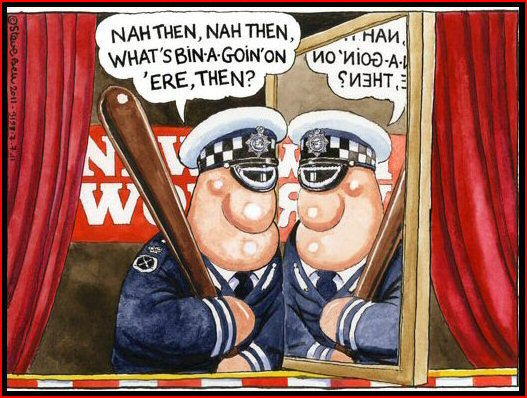
Which only leaves me now, to have a look in my 'blasphemy' folder for a bit of something to decorate this post with.

Oh! and perhaps inquire of my contacts in Spain to see if I can get a better insight into what is actually going on in this case.

Update, opinion from Spain:

My personal opinion about that case, fortunately like nearly everyone in this country, is that this judgment is an absurdity.

The case hase been kicking around the courthouses for eight years, has already been filed twice, but this time a Madrid court has applied for "first time" Article 525 of our Penal Code that prescribes a sentence of up to 12 months for offending "the feelings of the members of a religious denomination."

I hope that everything stays in nothing. When I get information about the sentence I'll get in touch with you, for now we are still waiting. Mercedes: Hasta que se sepa la Verdad


Spanish artist faces prison over 'how to cook Christ' film


Javier Krahe prosecuted for 'offending religious feelings' after 1978 short film was broadcast on Spanish TV
Ben Child
28 May 2012

A leading Spanish artist faces up to a year in prison after being prosecuted for "offending religious feelings" in relation to a short film he made more than 30 years ago that claimed to show "how to cook Jesus Christ".
Javier Krahe, who has been a popular and provocative figure in Spain for nearly half a century, made the film in 1978 but it was only shown on Spanish TV in 2004 as a backdrop to an interview with its creator. The little-known charge – comparable with but not identical to Britain's blasphemy law, remains part of the penal code despite never having been applied before in Spanish legal history.
Krahe's 54-second film uses the tone of a cooking programme, with chefs advised to remove Jesus' nails and separate him from his crucifix, which should be left to one side. Christ's tiny white body – a small figurine is used – is then shown being washed, lightly smothered in butter, placed on a bed of aromatic herbs in a glass tray and popped into an oven. "One gaunt Christ" is apparently enough to feed two, and when the dish is ready (after three days) it miraculously emerges from the oven without assistance.
There have been two previous failed attempts to prosecute Krahe, who is currently on bail for €192,000 (£153,000). The latest prosecution is the result of a court action by the Catholic legal association the Centro Juridico Tomas Moro.
"How do you show that someone's religious feelings have been hurt?" Krahe told El Pais newspaper, adding that he considers the prosecution to be absurd. "I'm accused of a series of things that I haven't done. I don't appear on television cooking Christ, and I haven't ever used these images [in a performance]." His supporters say freedom of speech laws should be changed to allow room for blasphemy.
Krahe is due to appear in Madrid's regional court, where statements from witnesses in the case are due to be heard on Monday. Gruniad
Other: Spain Review
Just the one above for decoration, but a small gallery of Jesus and Mo below. Two birds with one blasphemous stone as it were.


Wednesday, June 06, 2012

New Head of IPCC: Cops Are Bent

Now that's what I call a clean-up rate. 8,500 allegations, 13 convictions.

Thousands of police accused of corruption – just 13 convicted

Forces should not probe their own officers, says IPCC chief as shocking figures come to light
Paul Peachey
25 May 2012


The new head of the Independent Police Complaints Commission (IPCC) has questioned the ability of forces to investigate their own officers for corruption after it emerged that more than 8,500 allegations of wrongdoing resulted in just 13 criminal convictions.

Officers – including some from the most senior ranks – were accused of crimes including rape, the misuse of corporate credit cards and perverting the course of justice, but most cases were not substantiated and only a tiny fraction ever came to court.

Dame Anne Owers said that there was scepticism about the extent to which police officers could investigate colleagues' alleged crimes, and she demanded more resources to supervise inquiries to ensure confidence in the system. "The public is understandably doubtful about the extent to which, in this particular instance, the police can investigate themselves," she said in a report by the IPCC.

She concluded that the corruption identified over the three years to 2011 was not endemic or widespread. But she accepted that it was "corrosive of the public trust that is at the heart of policing" with the number of cases increasing.

"A serious focus on tackling police corruption is important, not just because it unearths unethical police behaviour, but because of the role it plays in wider public trust," said Dame Anne, a former inspector of prisons.

The report was published just after it was announced that the IPCC – which looks into allegations of police misconduct and deaths in custody – will itself be put under the spotlight by a powerful parliamentary committee amid concerns over its record. Its investigation teams include former police officers and the Home Affairs Select Committee will assess whether it is able to carry out impartial inquiries. More Independent

Poor Muhammad Poor Kuwaiti Ten Years For a Tweet

I despair, I really do; these people are insane.

Muhammad brutally assaulted via Twitter; criminal sentenced to 10 years
by: Mike Daniels

Rather than defending the all-powerful Allah from nasty words, a Kuwait court has instead defended a collection of dead people from “blasphemy”.

A court sentenced a 26-year-old Kuwaiti to 10 years in prison on Monday after ruling that he had endangered state security by insulting the Prophet Mohammed, his wife Ayesha and his companions on social media, his lawyer Khaled al-Shatti said.

“We plan to challenge the ruling against my client Hamad al-Naqi in the appeals court and we are very optimistic that the higher court will cancel the sentence,” Shatti told AFP.

Naqi was also charged with insulting the Gulf regimes of Saudi Arabia and Bahrain and for spreading false news that undermined Kuwait’s image abroad.

The charges were based on a number of tweets on his Twitter account, but Naqi told the interrogators that his account had been hacked, the lawyer said.

The particular assaults–that is, tweets–are not available for review, so we don’t know exactly what he said. We do know that the plaintiff and some Kuwaiti politicians called for the death penalty:

The civil plaintiff arguing the case against Naqi, as well as some Kuwaiti politicians, had called for Naqi to be executed in a case that stoked sectarian tensions in the Gulf state.

“This verdict is a deterrent to those who insult the Prophet Mohammad, his companions and the mothers of the believers,” civil plaintiff Dowaem al-Mowazry said in a text message.

Naqi was also attacked in prison by a fellow inmate.

If the fellow inmate is so devout, why is he in prison? Always a curious situation.

Last month, Kuwait’s parliament approved an amendment to their constitution making insulting Allah and Muhammad (by Muslims) punishable by death. Kuwait being a constitutional monarchy, Sheikh Sabah would have to approve the measure, and has not yet done so. He recently declined to approve a proposal to make all Kuwait law comply with Shariah law. secularnewsdaily


Problems At Fukushima 4 Not Going Away Anytime Soon

For greater understanding of the problems surrounding Fukushima 4, and the potential for a catastrophe of global proportions, see the preceding four posts under the Japan tag.


Radioactive waste at Fukushima threatens second nuclear catastrophe
Hiroko Tabuchi, Matthew Wald
May 28, 2012

TOKYO: What passes for normal at the Fukushima Daiichi nuclear plant today would have caused shudders among even the most sanguine of experts before an earthquake and tsunami set off the world's second most serious nuclear crisis after Chernobyl.

Fourteen months after the accident, a pool brimming with used fuel rods and filled with vast quantities of radioactive caesium still sits on the top floor of a heavily damaged building, covered only with plastic.

The public's fears about the pool have grown in recent months as some scientists have warned that it has the most potential for setting off a new catastrophe. The three nuclear reactors that suffered meltdowns are in a more stable state, but frequent quakes continue to rattle the region.

The worries gained new traction in recent days after the operator of the plant, Tokyo Electric Power Co., or TEPCO, said it had found a slight bulge in one of the walls of the reactor building, stoking fears over the building's safety.

To try to quell such worries, the government sent the Environment and Nuclear Minister to the plant on Saturday, where he climbed a makeshift staircase in protective garb to look at the structure supporting the pool, which he said appeared sound. The minister, Goshi Hosono, added that although the government accepted TEPCO's assurances that reinforcement work had shored up the building, it had ordered further studies because of the bulge.

Some outside experts have also worked to allay fears, saying that the fuel in the pool is now so old that it cannot generate enough heat to start the kind of accident that would allow radioactive material to escape.

But many Japanese have scoffed at those assurances and point out that even if the building is able to withstand further quakes, a claim that they question, the jury-rigged cooling system for the pool has already malfunctioned several times, including a 24-hour failure in April. Had the failures continued, they would have left the rods at risk of dangerous overheating.

Government critics are especially concerned, since TEPCO has said the soonest it could begin emptying the pool is late next year, dashing hopes for earlier action. ''The No. 4 reactor is visibly damaged and in a fragile state, down to the floor that holds the spent fuel pool,'' said Hiroaki Koide, an assistant professor at Kyoto University's research reactor institute and one of the experts raising concerns. ''Any radioactive release could be huge and go directly into the environment.''

The fears over the pool at reactor No. 4, amplified over the web, are helping to undermine assurances by TEPCO and the Japanese government that the Fukushima plant has been brought to a stable condition and are highlighting how complicated the clean-up of the site, expected to take decades, will be. The concerns are also raising questions about whether Japan's all-out effort to convince its citizens that nuclear power is safe kept the authorities from exploring other - and some say safer - options for storing used fuel rods.

''It was taboo to raise questions about the spent fuel that was piling up,'' said Hideo Kimura, who worked as a nuclear fuel engineer at the Fukushima Daiichi plant in the 1990s. ''But it was clear that there was nowhere for the spent fuel to go.''

The worst-case situations for reactor No. 4 would be for the pool to run dry if there is another problem with the cooling system and the rods catch fire, releasing enormous amounts of radioactive material, or that fission restarts if the metal panels that separate the rods are knocked over in a quake. That would be especially bad because the pools, unlike reactors, lack containment vessels to hold in radioactive material.

Attention has focused on No. 4's spent fuel pool because of the large number of assemblies filled with rods that are stored at the reactor building.

According to TEPCO, the pool at the No. 4 reactor, which was not operating at the time of the accident, holds 1331 spent fuel assemblies, which each contain dozens of rods.

Professor Koide and others warn that TEPCO must move more quickly to transfer the fuel rods to a safer location. But such transfers have been greatly complicated by the accident. Ordinarily the rods are lifted by cranes, but at Fukushima those cranes collapsed during the series of disasters that started with the earthquake and included explosions that destroyed portions of several reactor buildings.

TEPCO has said it will build a separate structure next to reactor No. 4 to support a new crane. But under the plan, released last month, the fuel removal will begin late next year. WAToday

More in the sidebar, tagged Japan.

Tuesday, June 05, 2012

France Hands Down Shockingly Lenient Sentences To Parents of FGM Victims

Before we crack on with the current post, I thought it might be prudent to import something I said previously in a post entitled: Democracy! I’ll Take Anarchy Any Day. A bizarre enough post in its own right, but certainly pertinent to this post, if only to highlight the (misogynist) attitudes of the Georgia House of Representatives.

But it is for more reasons than that, that I make use of the words. The pathetically lenient sentience handed down to the father and mother, twenty four and eighteen months respectively, for systematically maiming and disfiguring their own four daughters, is I think, and particularly for France, is nothing short of an outrage, and in itself borders on the criminal.

The text below is response to the sentencing guidelines recommended by the Georgia House of Representatives in regard to legislation banning the practice of female genital mutilation. (FGM) What I must stress however, is just how polite I am being regarding my feelings to acts of such barbarity.


Two to twenty years; I wouldn’t have a problem with the full twenty being handed down to any parent who subjected a daughter to such a selfish act of barbarism, in fact if religion were cited as the reason for carrying out this heinous act, I would give them forty years.

And my reasons would not be, as you might have so easily gathered, that I am anti religion, for this practice is nothing whatsoever to do with religion, it is but for the purposes of subjugating women and robbing them of their sexuality and as such, make them less likely to “stray.” And in doing so, bolster against the overriding insecurity of the misogynist males that abound in the countries where this practice still takes place.
As I said above, it is a bizarre post, because the House went on to include a ban female genital piercings, displaying in the twenty first century, attitudes that are simply astounding.

The legislation applies only to females mind you, it doesn't apply to the male of the species. Democracy! I’ll Take Anarchy Any Day

A slight change from original plans, the Wail has a more comprehensive article than the one I intended to employ.


Islamic holy man and his wife are jailed for mutilating the genitals of their four daughters

Victims sob in court as parents are led away
Minister brands female circumcision a 'grave crime'
By Craig Mackenzie
3 June 2012

An Islamic holy man and his wife have been jailed for the genital mutilation of their four daughters.

The case has shocked France and was branded by a female government minister as a 'grave crime' and an 'intolerable affront to women's dignity.'

All four of the victims, now aged between 11 and 20, were in court to hear the sentence and wept and cried out as their parents were led away from the dock.

The unnamed father was sentenced to two years and his wife got 18 months for allowing a 'doctor' to remove parts of their vaginas.

They were charged with ‘complicity in voluntary violence having led to mutilation by an older person of a minor under the age of 15 years’ , a crime punishable by a maximum of 20 years jail.

The father was said to be a ‘ marabout’ - an Arabic word for an Islamic ascetic holy man alleged to be endowed with magical powers.

The couple originally came from the west African state of Guinea where according to a 2007 study, 96 per cent of young girls have their genitals mutilated in the name of religion. More with photo's.
More in the sidebar under FGM. A previous French related issue posted under the 'Us and Them' tag: 'Your religious values are not superior to the laws of the republic.' French Muslim Jailed

Twelve Million Spent on River Pageant Let's Screw a Few Jobseekers

Who's in charge of the PR? Give him a fucking medal.


Unemployed bussed in to steward river pageant
Coachloads of jobless people brought in to work unpaid on river pageant as part of Work Programme
Shiv Malik
4 June 2012


Some of those hired as stewards had to spend the night before the pageant sleeping under London Bridge.

A group of long-term unemployed jobseekers were bussed into London to work as unpaid stewards during the diamond jubilee celebrations and told to sleep under London Bridge before working on the river pageant.

Up to 30 jobseekers and another 50 people on apprentice wages were taken to London by coach from Bristol, Bath and Plymouth as part of the government's Work Programme.

Two jobseekers, who did not want to be identified in case they lost their benefits, said they had to camp under London Bridge the night before the pageant. They told the Guardian they had to change into security gear in public, had no access to toilets for 24 hours, and were taken to a swampy campsite outside London after working a 14-hour shift in the pouring rain on the banks of the Thames on Sunday.

One young worker said she was on duty between London Bridge and Tower Bridge during the £12m river spectacle of a 1,000-boat flotilla and members of the Royal family sail by . She said that the security firm Close Protection UK, which won a stewarding contract for the jubilee events, gave her a plastic see-through poncho and a high-visibility jacket for protection against the rain.

Close Protection UK confirmed that it was using up to 30 unpaid staff and 50 apprentices, who were paid £2.80 an hour, for the three-day event in London. A spokesman said the unpaid work was a trial for paid roles at the Olympics, which it had also won a contract to staff. Unpaid staff were expected to work two days out of the three-day holiday.

The firm said it had spent considerable resources on training and equipment that stewards could keep and that the experience was voluntary and did not affect jobseekers keeping their benefits.

The woman said that people were picked up at Bristol at 11pm on Saturday and arrived in London at 3am on Sunday. "We all got off the coach and we were stranded on the side of the road for 20 minutes until they came back and told us all to follow them," she said. "We followed them under London Bridge and that's where they told us to camp out for the night … It was raining and freezing."

A 30-year-old steward told the Guardian that the conditions under the bridge were "cold and wet and we were told to get our head down [to sleep]". He said that it was impossible to pitch a tent because of the concrete floor. More Guardian


You will allow me a bit of poetic licence I'm sure.

The Black Velvet Band

Well, in a neat little town they call Belfast, apprentice to trade I was bound
Many an hours sweet happiness, have I spent in that neat little town
A sad misfortune came over me, which caused me to stray from the land
Far away from my friends and relations, betrayed by the black velvet band

Her eyes they shone like diamonds
I thought her the queen of the land
And her hair it hung over her shoulder
Tied up with a black velvet band

I took a stroll down Broadway, meaning not long for to stay
When who should I meet but this pretty fair maid comes a tripping along the highway
She was both fair and handsome, her neck it was just like a swans
And her hair it hung over her shoulder, tied up with a black velvet band

Her eyes they shone like diamonds
I thought her the queen of the land
And her hair it hung over her shoulder
Tied up with a black velvet band

I took a stroll with this pretty fair maid, and a gentleman passing us by
Well I knew she meant the doing of him, by the look in her roguish black eye
A goldwatch she took from his pocket and placed it right in to my hand
And the very first thing that I said was bad luck to the black velvet band

Her eyes they shone like diamonds
I thought her the queen of the land
And her hair it hung over her shoulder
Tied up with a black velvet band

Before the judge and the jury, next morning I had to appear
The judge he says to me: "Young man, your case it is proven clear
We'll give you seven years penal servitude, to be spent faraway from the land
Far away from your friends and companions, betrayed by the black velvet band"

Her eyes they shone like diamonds
I thought her the queen of the land
And her hair it hung over her shoulder
Tied up with a black velvet band

So come all you jolly young fellows a warning take by me
When you are out on the town me lads, beware of them pretty colleens
For they feed you with strong drink, "Oh yeah", 'til you are unable to stand
And the very next thing that you'll know is you've landed in Van Diemens Land

Her eyes they shone like diamonds
I thought her the queen of the land
And her hair it hung over her shoulder
Tied up with a black velvet band

Beware of them pretty colleens.

Pray Away The Gay It's Not Only In Ameriki

Shocked I tell ye, shocked! The progressive Netherlands! Still. at least they have rectified the situation.

Minister removes Christian anti-gay therapy from health insurance
05 June 2012

Therapy provided by a Christian mental health group to help homosexuals 'repress their sinful urges' is being removed from the basic health package, health minister Edith Schippers told parliament in a briefing on Tuesday.

In January, the minister said she found it 'bizarre' that the treatment offered by the orthodox Christian organisation Different was being paid for by health insurers. However, because the Different is officially recognised as a provider of therapies, insurers could not refuse to pay.

Now health inspectors have investigated Different and said there is no question of people 'wrestling' with their homosexual feelings having psychiatric problems because of their religious beliefs, reports the Telegraaf.

Such people should seek pastoral care which should not be paid for by health insurance, the inspectors say. 'In these cases, there is no question of a psychiatric diagnosis or psychiatric treatment,' they say. dutchnews.nl


My little tulip, sans bicycle.

Monday, June 04, 2012

John Pilger On Assange's Extradition Case And Infringements On His Human Rights

The full interview with author, documentary filmmaker and journalist John Pilger conducted by Thomas Hall, of Swedish newspaper Dagens Nyheter (DN).

DN: Julian Assange has ben fighting extradition to Sweden at a number of British courts. Why do you think it is important that he wins on Wednesday?

John Pilger: Because the attempt to extradite Assange is unjust and political. I have read almost every scrap of evidence in this case and it's clear, in terms of natural justice, that no crime was committed. The case would not have got this far had it not been for the intervention of Claes Borgström, a politician who saw an opportunity when the Stockholm prosecutor threw out almost all the police allegations. Borgström was then in the middle of an election campaign. When asked why the case was proceeding when both women had said that the sex had been consensual with Assange, he replied, "Ah, but they're not lawyers." If the Supreme Court in London rejects Assange's appeal, the one hope is the independence of the Swedish courts. However, as the London Independent has revealed, Sweden and the US have already begun talks on Assange's "temporary surrender" to the US -- where he faces concocted charges and the prospect of unlimited solitary confinement. And for what? For telling epic truths. Every Swede who cares about justice and the reputation of his or her society should care deeply about this.

DN: You have said that Julian Assange's human rights have been breached. In what way?

John Pilger: One of the most fundamental human rights -- that of the presumption of innocence -- has been breached over and over again in Assange's case. Convicted of no crime, he has been the object of character assassination --perfidious and inhuman -- and highly political smear, of which the evidence is voluminous. This is what Britain's most distinguished and experienced human rights lawyer, Gareth Peirce, has written: "Given the extent of the public discussion, frequently on the basis of entirely false assumptions ... it is very hard to preserve for [Assange] any presumption of innocence. He has now hanging over him not one but two Damocles swords of potential extradition to two different jurisdictions in turn for two different alleged crimes, neither of which are crimes in his own country. [and] his personal safety has become at risk in circumstances that are highly politically charged."

DN: You, as well as Julian Assange, don't seem to have confidence in the Swedish judicial system. Why not?

John Pilger: It's difficult to have confidence in a prosecutorial system that is so contradictory and flagrantly uses the media to achieve its aims. Whether or not the Supreme Court in London find for or against Assange, the fact that this case has reached the highest court in this country is itself a condemnation of the competence and motivation of those so eager to incarcerate him, having already had plenty of opportunity to to question him properly. What a waste all this is. More Professors blogg

H/T Maren.

A Bottle of Blasphemy With Jesus and Mo


Sunday, June 03, 2012

Memo to the Government: Please Grow Up You Pygmies

A great article, we need more like this.

Memo to the Government: please grow up, you pygmies

Hopeless, feckless, incompetent...what do our politicians imagine they are doing?
By Matthew Norman
01 Jun 2012

Political punditry may not be the hardest game in the journalistic world (that honour falls to restaurant reviewing) – but it is the one that most heavily taxes one’s reserves of judiciousness. We unsung heroes of what I call the Poncetariat strive mightily for nuance and equivocation. Politics is an infinitely complex business, after all, and poorly suited to crude, simplistic judgments.

All of which is a pre-emptive apology lest you find it too subtle and neurotic in the quest for balance when I end the week that has passed by observing, of this Government, that it is simply bloody useless; that it is run by a bunch of cocky, precocious schoolchildren; and that it is straying dangerously close, if it hasn’t crossed the borderline already, to becoming a national embarrassment.

Anyone who has reached middle age will have learnt to despise governments before. All administrations endure horrible periods of mismanagement, and become loathsome to chunks of the electorate in time. Never until now, however, have I looked on a front bench and disbelievingly muttered: what on earth do these idiotic kids imagine they are doing there?

The Prime Minister, the Chancellor, the Deputy PM, the Culture Secretary – these boys seem every inch as hopeless, feckless, incompetent and irredeemably immature as… well, for want of a better example, as me. And even I, for all the myriad lunacies, have never believed that I could run the customer relations department on the Marie Celeste, let alone a country as challenging as this one. What happened to the Delphic oracle’s injunction “know thyself”? Whither Dirty Harry’s counsel to an imminent corpse that “a man’s just got to know his limitations”?

Take Jeremy Hunt. In mercy’s name, please take him away, because never has the sound of a terminally degraded minister clinging to his red boxes until the scraping noise drives you to nausea been as pitiable. This cringeworthy crawler has metamorphosed in a few months from James Murdoch’s bitch to David Cameron’s human shield, and neither role falls within the remit of a Cabinet minister. But how did the hell he get there? What qualifies the winsome little jogger for high office?

Anyone eager to penetrate this enigma is directed to a website called Quietus, where its editor recalls three years working for the educational publishing company at which Mr Hunt made his millions. A certain Luke Turner writes of his old boss less with rancour than utter perplexity at how he rose so high so fast. “It was quite a shock when… we were informed that Jeremy Hunt would be standing as a Conservative MP. We were surprised, not only because we were amazed that anyone would vote for this affable lummox, but also that he’d never really displayed much in the way of political enthusiasm in the past.”

After sharing a 9/11 recollection – “Now my memory tells me that it was Hunt who, when we were listening intently to the radio reports of planes smacking into the World Trade Centre and Pentagon, came into the office to demand we turned the volume down as it was affecting the sales team’s telephone calls…” – he concludes with an analysis which, though not original (Nadine said it pithier), is worth quoting all the same. “Those three years working alongside Hunt give me an idea of the kind of government we currently have, run by these former public school boys who have barged their way through life not through merit or ability, but by birth. You would not have picked out Jeremy Hunt as a brilliant intellect, a powerful speaker, a man with any convictions… It was bad enough having him as a boss. The fact that he and his chums are running the country is far, far worse.”

Reflecting on yet another omnifiascoid week, in which the unending budgetary and other U-turns made the Government resemble a bumper car in a spin, and Cameron magisterially absolved Hunt of the very ministerial code-breaking to which he had effectively confessed minutes earlier, the judiciousness can no longer be resisted. It must be said that there are worthy and impressive members of this Cabinet. Ken Clarke and William Hague remain class acts, while Vince Cable should be canonised for his declaration of war that led to George Osborne finding the solution which Mr Hunt liked so much at the time. Meanwhile, albeit a bit besmirched by continuing membership of the Murdoch Mutual Admiration Society, Michael Gove stands out as the lone adult among this fortysomething crop of pygmy Peter Pans. One need not labour the point that those four emerged from less gilded beginnings than the quartet mentioned above.

Tempting as it is, we cannot forever hark back to Churchill taking power at 65, or fixate on the generations of ministers who saw action, or worked down the mines, or wrote fine books about their political philosophies, or at the very least held down proper jobs before entering Parliament. One cannot blame this generation of leaders for being born to privilege in a decadent, post-ideological era. But you can certainly resent them for making no effort to rise above the limitations of that, and for the arrogance, conceit, callowness and general cluelessness that once again defined their week. And staring in mounting anguish at the front bench (and at the Labour one opposite), you can hardly help but pull the face from Munch’s painting, and ask in anguish when, if ever, we will see grown-ups running a British government again. Telegraph

A Brief Interview With The Prime Minister


Just a slight shift in focus required.

Andrew Marr and David Cameron, what a pair of twats.

Hunt acted 'wisely and fairly' says Cameron Independent

Queen Tried To Use State Poverty Fund To Heat Buckingham Palace


Queen tried to use state poverty fund to heat Buckingham Palace

Ministers were asked if money earmarked for schools, hospitals and low-income families could be used to meet soaring fuel bills

Robert Verkaik
24 September 2010


The Queen asked ministers for a poverty handout to help heat her palaces but was rebuffed because they feared it would be a public relations disaster, documents disclosed under the Freedom of Information Act reveal.

Royal aides were told that the £60m worth of energy-saving grants were aimed at families on low incomes and if the money was given to Buckingham Palace instead of housing associations or hospitals it could lead to "adverse publicity" for the Queen and the Government.

Aides complained to ministers in 2004 that the Queen's gas and electricity bills, which had increased by 50 per cent that year, stood at more than £1m a year and had become "untenable".

The Royal Household also complained that the £15m government grant to maintain the Queen's palaces was inadequate.


In search of more money-saving schemes, the Queen's deputy treasurer wrote to the Department for Culture, Media and Sport to ask whether the Royal Household would be eligible for a grant to replace four combined heat and power (CHP) units at Buckingham Palace and Windsor Castle.

He asked: "Community Energy can fund up to 40 per cent of the capital costs of implementing a community heating scheme... Since we are already grant-in-aid funded [the Queen receives £15m a year for the upkeep of her palaces] we would like to know whether the Household [would] be able to benefit from these grants. I look forward to your comments."

Under this scheme administered by the Environment department, schools, hospitals, councils and housing associations have been awarded £60m for heating programmes which benefit people on low incomes.

Taxpayers already contribute £38m to pay for the Royal Family. Yet some of the buildings which would have benefited from the energy grant were occupied by minor royals living in grace and favour accommodation on the royal estates. Surprisingly the Government offered no resistance to the proposed application and cleared the way for the Queen to take advantage of the handout.

But by August 2004 the documents show that Whitehall officials had changed their minds and poured cold water on the whole idea. In an email sent to the Palace it was diplomatically explained that the funds were aimed at people on "low incomes".

The official wrote: "I think this is where the Community Energy Funding is directed and ties in with most allocations going to community heating schemes run by local authorities, housing associations, universities etc. I also feel a bit uneasy about the probable adverse press coverage if the Palace were given a grant at the expense of say a hospital. Sorry this doesn't sound more positive." More Independent

Social mobility? Not While We Have Our Hereditary Monarchy


Social mobility? Not while we have our hereditary monarchy


The royal family depends on a history our schools don't teach any longer and a lifestyle too close to Hello! for comfort
Editorial. The Observer
3 June 2012

Once upon a time, it all seemed so simple. "Queen and Empire: a Pageant of unparalleled meaning and magnificence." Or so ran the newspaper headlines in 1897 when Queen Victoria celebrated her 60 years on the throne. Some 50,000 troops converged at St Paul's to give thanks: the Dyaks from Borneo, the Sikhs from the Punjab, all honouring "the Queen of Earthly Queens". Britain strode into the future with pride, confidence, pomp and circumstance. But this weekend, as a second monarch has her diamond moment? The headlines look back, not forward. There is, and will be, magnificence all right, carefully screened against terrorist outrages, suitably muted for an era of austerity. But the "meaning" of it all remains painfully elusive.

That isn't, in any sense, the fault of the 86-year-old who commands stage centre. Hereditary monarchy is a throw of the dice. Queen Elizabeth II has served Britain well. She's been tireless, devoted and beyond personal reproach. She deserves the affection that will be lavished on her today. But the nature of the country she reigns over has changed utterly, and so, in turn, has the nature of its monarchy.

No dissembling. The Observer has long seen Britain's monarchy as an anachronism, a barrier to its full freedom and renewal. You cannot worry seriously about social mobility or last year's big idea of an even bigger society without seeing the furred arteries of class, deference and birth that hold us back. Where else in the democratic world does an unelected second chamber wield legislative power? Where else is the confected pall of the past, with its lords, ladies and faintly ridiculous rituals so strong?

The monarchy has changed over those 115 years. It has descended, sometimes unsteadily, from its pedestal of remoteness, so that it sometimes seems to exist today at the whim of the nearest news-stand or flick of a TV remote. So 80% of Britons support the royal status quo, routing a mere 13% of republicans on the latest polls. So what happens next year or the year after when poll ratings take a sudden dive (as they inevitably do)? Fold a formidable queen, a gallant duke and a couple of young, photogenic princes into the mix, season with a dash of Kate and sprinkle of tiny feet and you have the perfect celebrity recipe for Leveson times. Yet celebrity culture, as we know, always moves restlessly on. It doesn't like old and boring. It would like – those polls again – to give King Charles and Camilla a miss and jump straight to a more glamorous generation.

By the time that grey King William and Queen Catherine arrive, decades on, the moving finger of adulation will surely be dancing elsewhere. Just look at some of the guests who ate lamb and asparagus at Windsor's great jubilee lunch a couple of weeks ago: Prince Hans-Adam of Liechtenstein, Grand Duke Henri of Luxembourg, King Mswatsi of Swaziland, the Emir of Qatar, Prince Albert of Monaco — plus, from Greece, Romania, Bulgaria and Yugoslavia, the deposed remnants of former dynasties.

There was some disquiet as that party assembled. What on earth was a brutal King of Bahrain doing in such company? But the message was rather subtler than that.

Hereditary monarchy survives in northern Europe – in Belgium, the Netherlands, Sweden, Denmark – by lying low and living modestly, wearing woolly sweaters fit for The Killing. In other lands – Japan, Thailand – it still retains an almost mystic allegiance. In the Arab and African worlds, monarchy means crude power. There is really no common theme to serve with those "juicy Kent strawberries" on the Windsor menu. And nor is there a continuing royal show, anywhere in the world, to match the buckets full of media significance now heaped again over the House of Windsor this long bank holiday.

It's a weird brew: public service and publicly funded privilege intermingled. It depends on a history our schools don't teach any longer and a lifestyle too close to Hello! for comfort. It has sustained Elizabeth II through 60 testing years. Inertia or better may sustain it for many more. But Britain's future? There, perhaps, it is best to close discussion, like London's bridges, and live for the moment where meaning doesn't much matter. The Observer

Saturday, June 02, 2012

John Pilger: War, the Media and the "High Moral Values" of Tony Blair

Among other things, Pilger reserves, not for the first time, his usual place of little regard for the BBC's Andrew Marr. But in fairness, he hasn't a lot good, to say about anybody else for that matter.

John Pilger: War, the media and the "high moral values" of Tony Blair

Standing in Downing Street on the night of the assault on Iraq, the BBC's political editor rejoiced at the vindication of Blair who, he said, had promised "to take Baghdad without a bloodbath".
By John Pilger
1 June 2012

Rupert Murdoch is a bad man. His son James is also bad. Rebekah Brooks is allegedly bad.

The News of the World was very bad; it hacked phones and pilloried people. British prime ministers grovelled before this iniquity.

David Cameron even sent text messages to Brooks signed "LOL", and they all had parties in the Cotswolds with Jeremy Clarkson.

Nods and winks were duly exchanged on the BSkyB deal.

Shock, horror.

Offering glimpses of the power and petty gangsterism of the British tabloid press, the inquiry conducted by Lord Leveson has, I suspect, shocked few people. As the soap has rolled on, bemusement has given way to boredom.

Tony Blair was allowed to whine about the Daily Mail's treatment of his wife until he and the inquiry's amoral smugness protecting him were exposed by a member of the public, David Lawley-Wakelin, who shouted, "Excuse me, this man should be arrested for war crimes."

His Lordship duly apologised to the war criminal and the truth-teller was seen off.

Why Murdoch should complain about the British establishment has always mystified me. His interrogation, if that is the word, by Robert Jay QC, was a series of verbal marshmallows that Murdoch promptly spat out. When he described one of his own rambling, self-satisfied questions as "subtle", Jay received this deft dismissal from Murdoch: "I'm afraid I don't have much subtlety in me."

As the theatre critic Michael Billington reminded us recently, it was in the Spectator in 1955 that Henry Fairlie coined the term "the establishment", defining it as "the matrix of official and social relations within which power in Britain is exercised".

For most of my career as a journalist, Murdoch has been an influential and admired member of this club: even a mentor to many of those now casting him as a "bad apple".

His deeply cynical mantra, "I'm only giving the public what they want", was echoed by journalists and broadcasters as they lined up to dumb down their work and embrace the propaganda of corporatism that followed Murdoch's bloody move to Wapping in 1986.

More than 5,000 men and women were sacked, and countless families destroyed and suicides committed; and Murdoch could not have got away with it had Margaret Thatcher and the Metropolitan Police not given him total, often secret support, and journalists not lain face down on the floors of buses that drove perilously through the picket lines of their former, principled colleagues.

Cheering him on, if discreetly, were those now running what Max Hastings has called the "new establishment": the media's managerial middle class, often liberal to a fault, that was later to fall at the feet of Murdoch's man Blair, the future war criminal, whose election as prime minister was celebrated in the Guardian with: "Few now sang England Arise, but England has risen all the same."

Leveson has asked nothing about how the respectable media complemented the Murdoch press in systematically promoting corrupt, mendacious, often violent political power whose crimes make phone-hacking barely a misdemeanour. The Leveson inquiry is a club matter, in which a member has caused such extraordinary public embarrassment he must be black-balled, so that nothing changes.

What jolly fun to hear Jeremy Paxman grass on Piers Morgan who, he gossiped, described to him how to hack phones. Paxman was asked nothing by Jay about the essential role of the BBC and its leading lights as state propagandists for illegal wars that have killed, maimed and dispossessed millions.

How ironic that the lunch Paxman attended at the Daily Mirror appears to have been in 2002 when the Mirror, edited by Morgan, was the only Fleet Street newspaper uncompromisingly opposed to the coming invasion of Iraq: thus reflecting the wishes of the majority of the British public.

And what a wheeze it was to hear from the clubbable Andrew Marr, the BBC's ubiquitous voice: he of the super-injunction. Just as Murdoch's Sun declared in 1995 that it shared the rising Blair's "high moral values", so Marr, writing in the Observer in 1999, lauded the new prime minister's "substantial moral courage".

What impressed Marr was Blair's "utter lack of cynicism", along with his bombing of Yugoslavia which would "save lives". By March 2003, Marr was the BBC's political editor. Standing in Downing Street on the night of the assault on Iraq, he rejoiced at the vindication of Blair who, he said, had promised "to take Baghdad without a bloodbath".

The diametric opposite was true. In hawking his self-serving book in 2010, Blair selected Marr for his "exclusive TV interview". During their convivial encounter they discussed an attack on Iran, the country Hillary Clinton once said she was prepared to "obliterate".

In the text messages disclosed by Leveson between Murdoch lobbyist Frederic Michel and Culture Secretary Jeremy Hunt, there is this one from Michel: "Very good on Marr as always". In a cable leaked to WikiLeaks, the US embassy in London urged Hillary Clinton to be interviewed by the "congenial" Marr because he often "sets the political agenda for the nation" and "will offer maximum impact for your investment of time". Inquisitor Jay showed no interest.

When Alastair Campbell "gave evidence", Jay waved a copy of Blair's A Journey and quoted Blair's view of his chief collaborator as "a genius".

"Sweet," responded Campbell.

"And with great clunking balls as well," continued Jay QC, awaiting the laughter. The silence of 780,000 Iraqi widows was a presence.

Not a single opponent of the institutional power of the media has been called by Leveson, though farce is welcomed. Richard Desmond, who owns the Daily Express and a section of the British porn industry, during his appearance damned the Daily Mail as "Britain's worst enemy" and said the Press Complaints Commission "hated our guts".

Shock, horror. Or just sweet. johnpilger.com

JFK Fifty Years On

Read as much or as little as you wish, but I have underlined the crux of the matter. Not to be confused with Dr David Kelly's suicide and post mortem report sealed for seventy years.

What gets declassified?

JFK assassination documents offer surprising lessons about government secrecy -- and Obama's presidency
By Russ Baker

Next year will be a half-century since the death of JFK. And the Obama Administration thinks we need to keep secret the records on the matter … a little longer yet.

Believe it or not, more than 50,000 pages of JFK assassination–related documents are being withheld in full. And an untold number of documents have been partially withheld or released with everything interesting blacked out. But why?

Since the government and the big media keep telling us there was no conspiracy and that it was all Lee Harvey Oswald acting on his own, why continue to keep the wraps on? More Salon

Stephen Lawrence: Theresa May to Met Police "I Don't Believe You"

Or words to that effect.

And if you read the lengthy report from Independent, you might not have too much trouble arriving at the same conclusion. Link below.


Stephen Lawrence: Theresa May orders review into police corruption claims

Home secretary announces review a day after the Met police released its own review giving itself a clean bill of health

Vikram Dodd
1 Jun 2012

The home secretary has ordered an independent review into allegations that police corruption shielded the killers of Stephen Lawrence.

The decision by Theresa May comes a day after the Metropolitan police released the findings of its own review, which said it could find no evidence of corruption and that the force had passed all relevant material to the 1998 Macpherson inquiry.

Stephen, 18, was stabbed to death in Eltham, south London in April 1993 by a racist gang at least five strong, who racially abused him before attacking him.

The senior barrister expected to carry out the review is Mark Ellison QC, who led the prosecution case when two men were finally jailed in January for the murder after a 19-year fight for justice by his family. Ellison's name was revealed by Stephen's mother, Doreen Lawrence, in a statement.

Although she had asked for a judge-led inquiry into the corruption allegations, she welcomed the appointment, saying Ellison "is someone who has already shown his commitment in getting justice for me and my family".

The Guardian understands that a senior barrister who has reached the rank of Queens counsel, will be asked to examine suspicions of corruption made by the Lawrence family. One person being considered to carry out the review is a senior prosecutor.

In a statement confirming the review, the Home Office said: "The home secretary has asked for a QC-led review of the work the Metropolitan police has undertaken into investigating claims of corruption in the original Stephen Lawrence murder investigation."

The home secretary's decision comes after the Met's review, which gave itself a clean bill of health, began in March after allegations about corruption in the Lawrence case were made in the Guardian and Independent.

The claims centre on former Met commander Ray Adams, who was a senior officer in the area where Stephen was murdered, and former detective sergeant John Davidson, a senior detective on the first, flawed investigation into the racist killing.

Adams and Davidson had been the subjects of internal corruption investigations, after which neither officer faced disciplinary or criminal charges. They retired on full police pensions and denied any wrongdoing. Adams, who left the force because of a bad back, went on to work at a Rupert Murdoch-owned company, NDS, in a senior security role.

At the Macpherson inquiry into police failings in investigating Stephen's death, the Lawrence lawyers claimed Clifford Norris, whose son, David Norris, was a prime suspect in the murder, may have tried to use his influence to protect his son and others in the gang. David Norris was convicted of the murder in January this year, along with Gary Dobson.

The Macpherson inquiry said it could find no evidence of corruption, but the suspicions of the Lawrence family have not gone away.
The Met police said it would be "fully co-operating with the review and providing all relevant material to it".

In a statement, Mrs Lawrence said while she wanted a judge-led inquiry,she welcomed the review: "Firstly, it will be conducted by someone independent of both the police and the IPCC, organisations in which I have little faith and confidence and secondly, the person conducting the review, Mark Ellison QC, is someone who has already shown his commitment in getting justice for me and my family."

She said she reserved the right to criticise the review "should it fall below the high standards I expect" and said the new inquiry was the start of a process examining if corruption played a part in denying her justice for her dead son: "I see this review as only the start of a process which, should it reveal matters which need further exploration, that will be done without hesitation." Guardian

The copper, the Lawrence killer's father, and secret police files that expose a 'corrupt relationship' Independent

Friday, June 01, 2012

Leveson: Jeremy Hunt Round-up

I don't know which is the more pathetic, the general state of British politics, or Jeremy Hunt's performance before the Leveson inquiry.

And Hunt's "It was all Adam Smith's fault" was totally beneath contempt. Not to mention incredible.

All in all, Hunt convinced no-one, unless of course your name is Cameron, whose reaction to all this, is about as convincing as was Hunt himself.


Is Jeremy Hunt a scoundrel or a fool? He has been driven to absurdity

The culture secretary's defence is straight out of Lewis Carroll. David Cameron will soon have to explain why he appointed him
Brian Cathcart
31 May 2012

There is an old joke about a gamekeeper confronting a poacher who is heading home at dawn with a deer over his shoulder. "Aha!" exclaims the gamekeeper. "Caught you redhanded!" The poacher, all innocent surprise, replies: "What do you mean?" "I mean that, on your shoulder," says the gamekeeper, pointing. The poacher swivels his eyes towards his own shoulder, affects to see the dead animal for the very first time and, with an expression of horror, thrusts it away crying: "Yeugh! How did that get there?"

Jeremy Hunt's performance at the Leveson inquiry called that story to mind. You had to wonder what the judge made of it all, since down the years in the criminal courts he has no doubt seen his share of poacher types offering improbable defences.

Here was a secretary of state, no less, telling the inquiry that he did not know in 2010 what the term "quasi-judicial" meant, and asserting that when he was given responsibility for News Corporation's BSkyB bid he did not realise that meetings should be minuted by officials.

Here was a witness who professed not to see that his own "broad sympathy" with News Corp might, as a matter of probity, disqualify him from responsibility for the bid in just the way that Vince Cable's "acute bias" had done – even when he was reminded that his "sympathy" extended to reckless behind-the-scenes lobbying of the prime minister.

He also had no idea, he insisted, that phone hacking was "a volcano that was about to erupt", yet if he had read the 2010 report on hacking by his parliamentary colleagues on the Commons media select committee he would have found more than enough evidence of a corporate cover-up to worry a scrupulous minister.

The inquiry also heard that Hunt's special adviser, Adam Smith, was so perfect, conscientious and in tune with the minister's thinking that he might have qualified as his second brain, yet Hunt was unaware of the intensive, indiscreet two-way traffic of information between Smith and News Corp.

Remember, the inquiry has already had to swallow the assertion that a welter of emails from News Corp's PR man Fred Michel referring to his frequent, close contacts with "Jeremy", "Jeremy Hunt" and "JH" did not in fact relate to the man we know as Jeremy Hunt. More

~ ~ ~

Murdoch's men on the inside

As Jeremy Hunt is rocked by new revelations at Leveson Inquiry, George Osborne is sucked into row over BSkyB deal
01 June 2012

The Chancellor, George Osborne, has become the latest minister to be dragged into the BSkyB takeover scandal as evidence emerged suggesting that he played a behind-the-scenes role in the Government's handling of the £8bn bid.

Records retrieved from the phone of the Culture Secretary, Jeremy Hunt, show him and Mr Osborne exchanging text messages in the hours after anti-Murdoch remarks by Vince Cable were made public. Mr Hunt texted the Chancellor asking to talk about the takeover, saying he was "seriously worried we are going to screw this up". Mr Osborne texted back: "Hope you like the solution" – and then Mr Hunt was handed responsibility for deciding on the bid.

The revelation makes it more likely that Mr Osborne will be made to give evidence to the Leveson Inquiry and have to reveal the contents of his own texts and emails exchanged with the Murdoch empire. Other emails released yesterday show the depth of concern both in Downing Street and in Mr Hunt's own department about whether the Culture Secretary's previous noisy support for the Murdochs was clear evidence of bias and must rule him out of handling the deal. Mr Hunt can be seen emailing the Prime Minister's chief of staff in the hours after the row broke out.

Yesterday, David Cameron made clear he was staking his reputation on Mr Hunt being cleared by the Leveson Inquiry after the Culture Secretary gave more than five hours of evidence explaining his handling of the bid. Downing Street said the Prime Minister had no intention of calling an inquiry into whether Mr Hunt had broken the Ministerial Code and dismissed Labour claims that the Culture Secretary had misled Parliament.

But the position relies on Lord Justice Leveson agreeing that Jeremy Hunt was not aware of the extent and nature of the contact between his special adviser Adam Smith and the News Corp lobbyist Fréd Michel when he produces his final report.

Mr Cameron will also come under pressure from Labour who last night said it was deplorable that Mr Hunt would not face a government investigation under the code. More

~ ~ ~

Hunt defied advice on BSkyB bid

Jeremy Hunt defied government legal advice by communicating privately with James Murdoch about the BSkyB takeover bid, the Leveson Inquiry heard.
By Robert Winnett and Rowena Mason
31 May 2012

Documents before the inquiry showed that the Culture Secretary sent a series of text messages to the News Corp executive indicating his apparent support for the takeover; at one point congratulating him after the bid was approved by the EU.

He admitted that he continued to communicate privately with Mr Murdoch despite recommendations from his department’s lawyers on at least two occasions that he should not express opinions on the controversial £8 billion bid.

Despite the admissions, Downing Street yesterday cleared Mr Hunt of any wrongdoing within minutes of the evidence session finishing.

The Prime Minister expressed his confidence in the Secretary of State, who will not be referred to an independent adviser over claims he broke the ministerial code of conduct.

Labour said that the Culture Secretary had “lied” to Parliament and reiterated calls for his resignation. More and short video.

Security Video Saves NY Homeowner From Wrongful Arrest

Motherfuckers!

Officer Charged With Lying About Man’s Arrest
By Andy Newman
May 31, 2012

The homeowner was accused of trying to run over a police officer in the driveway outside his house. He was charged with felony reckless endangerment and spent three nights in jail.

The homeowner said that the police officer made the whole thing up and that he had video to prove it.

On Thursday, the Brooklyn district attorney’s office announced that a grand jury had sided with the homeowner, indicting the police officer, Diego A. Palacios, on five kinds of illegal lying, one of them a felony.

The case goes back to February, when the homeowner, John Hockenjos, a Metropolitan Transportation Authority engineer who lives in Sheepshead Bay, had an interaction with Officer Palacios and another officer in the driveway, which has been the subject of a bitter property feud between Mr. Hockenjos and a neighbor.

According to a criminal complaint sworn by Officer Palacios, Mr. Hockenjos drove his sedan “at high rate of speed” toward the officer, creating a “grave risk of death” and causing the officer “to jump out of the way to avoid being hit by defendant’s vehicle.”

But Mr. Hockenjos proffered a security video that showed something altogether different: Mr. Hockenjos pulling slowly into the driveway, where the officers and his neighbor are standing, and stopping. Neither officers nor neighbor budge. The video also shows Mr. Hockenjos being led off in handcuffs several minutes later.

“I’ve never seen this crystal-clear example of a false arrest,” Mr. Hockenjos’s lawyer, Craig Newman, told reporters at the time.

On Thursday, the Brooklyn district attorney’s office said Officer Palacios, 30, an eight-year veteran of the force, had been indicted May 15 on charges of offering a false instrument for filing, falsifying business records, making an apparently sworn false statement, perjury and making a punishable false written statement. He also was charged with official misconduct. He has been suspended.

The false business record offense, of which Officer Palacios is charged with two counts, is a felony.

All charges against Mr. Hockenjos have been dropped, prosecutors said. NYT


Wednesday, May 30, 2012

No Sign of Robin Hood Only the Sheriffs of Tennessee

I don't think this needs an introduction, although I do say a few words below regarding an earlier post on Highway robbery in Tennessee.

Man Loses $22,000 In New 'Policing For Profit' Case

By Phil Williams
Chief Investigative Reporter
May 22, 2012

MONTEREY, Tenn. -- "If somebody told me this happened to them, I absolutely would not believe this could happen in America."

That was the reaction of a New Jersey man who found out just how risky it can be to carry cash through Tennessee.

For more than a year, NewsChannel 5 Investigates has been shining a light on a practice that some call "policing for profit."

In this latest case, a Monterey police officer took $22,000 off the driver -- even though he had committed no crime.

"You live in the United States, you think you have rights -- and apparently you don't," said George Reby.

As a professional insurance adjuster, Reby spends a lot of time traveling from state to state. But it was on a trip to a conference in Nashville last January that he got a real education in Tennessee justice.

"I never had any clue that they thought they could take my money legally," Reby added. "I didn't do anything wrong."

Reby was driving down Interstate 40, heading west through Putnam County, when he was stopped for speeding.

A Monterey police officer wanted to know if he was carrying any large amounts of cash.

"I said, 'Around $20,000,'" he recalled. "Then, at the point, he said, 'Do you mind if I search your vehicle?' I said, 'No, I don't mind.' I certainly didn't feel I was doing anything wrong. It was my money."

That's when Officer Larry Bates confiscated the cash based on his suspicion that it was drug money.

"Why didn't you arrest him?" we asked Bates.

"Because he hadn't committed a criminal law," the officer answered.

Bates said the amount of money and the way it was packed gave him reason to be suspicious.

"The safest place to put your money if it's legitimate is in a bank account," he explained. "He stated he had two. I would put it in a bank account. It draws interest and it's safer."

"But it's not illegal to carry cash," we noted.

"No, it's not illegal to carry cash," Bates said. "Again, it's what the cash is being used for to facilitate or what it is being utilized for."

NewsChannel 5 Investigates noted, "But you had no proof that money was being used for drug trafficking, correct? No proof?"

"And he couldn't prove it was legitimate," Bates insisted.

Bates is part of a system that, NewsChannel 5 Investigates has discovered, gives Tennessee police agencies the incentive to take cash off of out-of-state drivers. If they don't come back to fight for their money, the agency gets to keep it all.

"This is a taking without due process," said Union City attorney John Miles.

A former Texas prosecutor and chairman of the Obion County Tea Party, Miles has seen similar cases in his area.

He said that, while police are required to get a judge to sign off on a seizure within five days, state law says that hearing "shall be ex parte" -- meaning only the officer's side can be heard.

That's why George Reby was never told that there was a hearing on his case.

"It wouldn't have mattered because the judge would have said, 'This says it shall be ex parte. Sit down and shut up. I'm not to hear from you -- by statute," Miles added.

George Reby said that he told Monterey officers that "I had active bids on EBay, that I was trying to buy a vehicle. They just didn't want to hear it."

In fact, Reby had proof on his computer.

But the Monterey officer drew up a damning affidavit, citing his own training that "common people do not carry this much U.S. currency."

Read Officer Bates' affidavit

"On the street, a thousand-dollar bundle could approximately buy two ounces of cocaine," Bates told NewsChannel 5 Investigates.

"Or the money could have been used to buy a car," we observed.

"It's possible," he admitted.

NewsChannel 5 Investigates asked Bates if Reby had told him that he was trying to buy a car?

"He did," the officer acknowledged.

"But you did not include that in your report," we noted.

"If it's not in there, I didn't put it in there."

So why did he leave that out?

"I don't know," the officer said.

Bates also told the judge the money was hidden inside "a tool bag underneath trash to [deter] law enforcement from locating it."

"That's inaccurate," Reby said. "I pulled out the bag and gave it to him."

And even though there was no proof that Reby was involved in anything illegal, Bates' affidavit portrays him as a man with a criminal history that included an arrest for possession of cocaine.

That was 20-some years ago," the New Jersey man insisted.

"Were you convicted?" we wanted to know.

"No, I wasn't convicted," he answered.

But Officer Bates says that arrest -- which he acknowledged was old -- was still part of the calculation to take Reby's money.

"Am I going to use it? Yes, I'm going to use it because he's been charged with it in the past -- regardless of whether it's 10 or 15 years ago," he said.

Attorney John Miles said he's frustrated with attitudes toward Tennessee's civil forfeiture laws, which make such practices legal.

"We are entitled not to be deprived of our property without due process of law, both under the Tennessee Constitution and the federal Constitution -- and nobody cares," Miles said.

"Nobody cares."

This year, state lawmakers debated a bill to create a special committee to investigate these "policing for profit" issues. That bill died in the last days of the legislative session.

After Reby filed an appeal, and after NewsChannel 5 began investigating, the state agreed to return his money -- if he'd sign a statement waiving his constitutional rights and promising not to sue.

They also made him come all the way from New Jersey, back to Monterey to pick up a check.

He got the check, but no apology.

"If they lied about everything in the report, why would they apologize?" Reby said.

And, with that, he was ready to put Tennessee in his rearview mirror.

"I really don't want to come back here," he said.

As for the appeals process, Reby was able to provide us and the state with letters from his employers, showing that he had a legitimate source of income.

It took him four months to get his money back, but it usually takes a lot longer for most people.

And that, Miles said, works to the benefit of the police.

He had two clients where police agreed to drop the cases in exchange for a cut of the money -- $1,000 in one case, $2,000 in another. In both cases, that was less than what they might have paid in attorney fees.

Miles called that "extortion." ICH

See previous stories: - "NC5 Investigates: Policing For Profit"
There is a whole bunch of stuff in a similar vein at the link above, but here is one I reported on earlier. Part of a larger post


Alan Wheatley, the original Sheriff of Nottingham in the ever so naff British television series, The Adventures of Robin Hood.


May 19, 2011

This one really has to be seen to be believed. There are parts of this clip that are reminiscent of watching a wildlife program ,where the vultures (uniforms) are squabbling among themselves over who gets first bite of the carcass.

Come back Dick Turpin, all is forgiven. At least he that the decency to wear a mask.

Highway Shakedowns
Tennessee Law Enforcement Stealing Money from Motorists
By Phil Williams
May 18, 2011

NASHVILLE, Tenn. A major News Channel 5 investigation has uncovered serious questions about Tennessee's war on drugs. Among the questions: are some police agencies more concerned about making money off the drugs, than stopping them?

At the center of this months-long investigation are laws that let officers pull driver over looking for cash. Those officers do not even have to file criminal charges against a person to take his/her money.

It turns out, those kind of stops are now happening almost every day in Middle Tennessee.

Case in point: a 2009 stop where a tractor trailer was stopped for a traffic violation, leading to a search and the discovery of large blocks containing almost $200,000 cash -- cash that officers keep on the suspicion that it's drug money. more transcript

Oh Ye of Too Much Faith

And too little brains.

“I didn’t want to be weak in my faith and disappoint God.”

Jury gives mother prison time in death
By Bill Braun
May 27 2012

A Tulsa County jury imposed a 2½-year prison sentence Friday night after convicting a woman of second-degree manslaughter in the diabetes-related death of her ailing son, whose treatment she believed relied upon spiritual means.

Prosecutors alleged that Susan Grady acted with “culpable negligence” toward 9-year-old Aaron Grady between June 2 and June 5, 2009, by not seeking medical treatment for him.

Aaron died June 5, 2009, at his family’s Broken Arrow apartment from complications of diabetes mellitus.

District Judge William Kellough set formal sentencing for June 8.

Grady, 43, who has been free on bond, was jailed after the verdict was delivered.

Defense attorney Rob Nigh, who expressed disappointment with the outcome, said he will seek an appeal bond, which would allow Grady to stay out of custody during an appeal. That matter could be taken up at the formal sentencing.

Grady did not testify.

In relying on prayer to heal her son, Grady, a member of the Church of the Firstborn, told police in 2009, “I didn’t want to be weak in my faith and disappoint God.”

Nigh has maintained that Grady’s conduct was not unreasonable, based upon the teachings of her church.

Assistant District Attorney Ben Fu told jurors in a closing argument that the prosecution “did not put the Church of the Firstborn on trial this week.”

“This case is about Aaron Grady,” Assistant District Attorney Sarah McAmis said. Go to page two.

Update: A more comprehensive report here.

They take their cattle to the vet but won’t take their children to the doctor

Monday, May 28, 2012

How America's Death Penalty Murders Innocents

The US judicial system has a thousand faults and is rotten to the core. One of the first things that needs outlawing is the use of testimony from jailhouse snitches.

Do check out the exonerationregistry.org link, it's scary I tell you. The figures are astonishing.


How America's Death Penalty Murders Innocents

The evidence is in: the US criminal justice system produces wrongful convictions on an industrial scale – with fatal results
David A Love
21 May 2012

The US criminal justice system is a broken machine that wrongfully convicts innocent people, sentencing thousands of people to prison or to death for the crimes of others, as a new study reveals. The University of Michigan law school and Northwestern University have compiled a new National Registry of Exonerations – a database of over 2,000 prisoners exonerated between 1989 and the present day, when DNA evidence has been widely used to clear the names of innocent people convicted of rape and murder. Of these, 885 have profiles developed for the registry's website, exonerationregistry.org.

The details are shocking. Death row inmates were exonerated nine times more frequently than others convicted of murder. One-fourth of those exonerated of murder had received a death sentence, while half of those who had been wrongfully convicted of rape or murder faced death or a life behind bars. Ten of the inmates went to their grave before their names were cleared.

The leading causes of wrongful convictions include perjury, flawed eyewitness identification and prosecutorial misconduct. For those who have placed unequivocal faith in the US criminal justice system and believe that all condemned prisoners are guilty of the crime of which they were convicted, the data must make for a rude awakening.

"The most important thing we know about false convictions is that they happen and on a regular basis … Most false convictions never see the light of the day," said University of Michigan law professors Samuel Gross and Michael Shaffer, who wrote the study.

"Nobody had an inkling of the serious problem of false confessions until we had this data," said Rob Warden, executive director of the Center on Wrongful Convictions at Northwestern University.

The unveiling of the exoneration registry comes days after a groundbreaking study from Columbia law school Professor James Liebman and 12 students. Published in the Columbia Human Rights Law Review, the study describes how Texas executed an innocent man named Carlos DeLuna in 1989. DeLuna was put to death for the 1983 murder of Wanda Lopez, a young woman, at a gas station. Carlos Hernandez, who bragged about committing the murder and bore a striking resemblance to DeLuna, was named at trial by DeLuna's defence team as the actual perpetrator of the crime. But DeLuna's false conviction is merely the tip of the iceberg, as the database suggests.

Recently also, Charlie Baird, a Texas judge, was prepared to issue an order posthumously exonerating Cameron Todd Willingham, who was executed in 2004 for the 1991 arson-related deaths of his three young daughters. Based upon "overwhelming, credible and reliable evidence", Baird concluded Willingham had been wrongfully convicted; this in addition to a jailhouse witness who recanted his testimony, and scientists who challenged the evidence at trial that the fire that destroyed the Willingham home was caused by arson. Baird was blocked by a state appeals court from issuing the order before he left the bench to pursue private practice.

And again in Texas, lawyers for Kerry Max Cook, a former death row prisoner who was wrongfully convicted of a 1977 murder in East Texas, claim that the district attorney in the case withheld in his possession the murder weapon and biological evidence in the case.

In 2012, the American death penalty has reached a crossroads. Public support for executions has decreased over the years, with capital punishment critics citing its high cost, failure to deter crime, and the fact that the practice places the nation out of step with international human rights norms. Last year, the US ranked fifth in the world in executions, a member of a select club of nations that includes China, Saudi Arabia, Iraq and Iran. Further, in the US states that have repealed the death penalty in recent years – including New Mexico, New Jersey, Illinois and, most recently, Connecticut – the killing of the innocent has been cited as a pivotal factor in favor of abolition.

Meanwhile, thanks to an EU embargo on lethal injection drugs to the US, states that practice capital punishment are faced with a shortage of poison to execute prisoners. Some have resorted to purchasing unapproved drug supplies on the black market, or using different chemicals altogether. For example, Ohio has abandoned its three-drug protocol for executions in favor of a single drug called pentobarbital, a barbiturate used to euthanize animals. And Missouri has decided to execute prisoners using propofol, a surgical anesthetic implicated in Michael Jackson's death.

Apparently desperate and lacking in options to kill, these states would be better-served by joining the civilized world and devoting their efforts to end the death penalty, rather than find new methods to satisfy their bloodlust – which, as the new evidence makes abundantly clear, cannot but cause them to execute innocent citizens. According to the Death Penalty Information Center, 140 men and women have been released from death row since 1973 due to innocence. That death row inmates are exonerated much more often than other categories of prisoner – even when a person's life is at stake – should shatter anyone's faith in the presumed infallibility of the court system.

It is now transparent to the public that, at best, the application of the death penalty is rife with human error and incompetence. At worst, we know there is prosecutorial misconduct: that the courts shelter and nurture officials who are rewarded for gaming the system by career advancement, rather than determining true guilt or innocence and ensuring that justice is done. Guardian